
Consulting
CTO as a service
An early-stage startup often cannot afford a full-time technical director, but without a technical voice in the room, the company risks the wrong stack, the wrong hires, or a product pitched badly to an investor. CTO as a service fills that role part time, at exactly the level the company needs right now.
- Pricing
- From $1,100 · ≈ 80,000 ₽
- Timeline
- A monthly engagement with no fixed end date, typically worth committing to for at least 3 months to see real value. Technical due diligence as a one-off service takes 1 to 2 weeks, timed to the deal.
A starting price. The total depends on scope, integrations and deadlines.
In short
CTO as a service starts at ₽1,100 a month for part-time engagement (typically 15 to 25 hours a month): technical strategy, involvement in developer hiring, code review and architecture decisions, investor-readiness prep, and regular calls with the founder. It fits startups without an in-house technical lead, and companies where the CTO has left and no replacement is in place yet.
Who this fits, and who it does not
This fits at three stages. First, before hiring the first developer: deciding the stack, working out what the first version of the product actually costs, and not getting talked into the first quote that lands. Second, when a development team already exists but lacks technical leadership above it: code with no review, architecture decisions made ad hoc, nobody accountable for technical quality to the founder. Third, when a technical voice is needed for investors: due diligence, answering questions on scalability and risk.
It does not fit if you need someone writing code in the product every day, that is an in-house developer or a lead, not an outsourced CTO. It also does not fit if decisions need to happen within hours rather than days: part-time engagement means regular access, not constant availability. We will say plainly at the brief if your situation calls for a full-time hire rather than a consultant.
What the work actually covers
Technical strategy: choosing and revisiting the stack, architecture decisions at forks in the road (rebuild vs extend, monolith vs services, custom build vs off-the-shelf), and prioritising technical debt against new features. Hiring: writing job specs in language that reflects real requirements, sitting in on technical interviews, and evaluating candidates a non-technical founder cannot properly assess alone.
Code review and quality: a periodic look at the codebase for risk, not a line-by-line check of every commit, but an outside pass every two to four weeks that catches problems before they get expensive. Investors: preparing the technical part of the pitch, joining investor calls that need a technical answer, and helping with the technical side of due diligence during a funding round.
- Regular calls with the founder, typically every 1 to 2 weeks
- Availability for urgent questions outside scheduled calls, within a reasonable turnaround
- Periodic code review and architecture review
- Involvement in hiring and technical interviews
- The technical side of investor-readiness preparation
Technical due diligence, as its own engagement
If you are on the investor or buyer side and need to assess a company’s technical state before a deal, rather than ongoing support, that is a separate one-off format: a review of the codebase, architecture, key-person dependency (bus factor), security posture, and the real cost of continuing to develop the product. The report is turned around against the deal’s timeline, not at the pace of ongoing consulting.
What the work includes
- Regular calls with the founder on an agreed schedule
- Written recommendations on stack and architecture decisions
- Hiring support: job specs, technical interviews, candidate evaluation
- Periodic code review with a risk report
- The technical section of investor materials
- Availability for urgent questions between calls
- A short monthly report: what was done, what was decided, what is next
How we work
- 01
Getting to know the product and team
We review the current state: code, architecture, team composition, near-term goals.
- 02
Scoping the engagement
We agree monthly hours, the call format and priorities for the first quarter.
- 03
Ongoing work
Calls, code review, hiring involvement and decisions as questions come up.
- 04
Monthly report
A short summary of what was done and decided, and priorities for the next month.
Technology and tools
- Miro
- Notion
- GitHub / GitLab
- Linear / Jira
- Docker
- PostgreSQL
Selected work
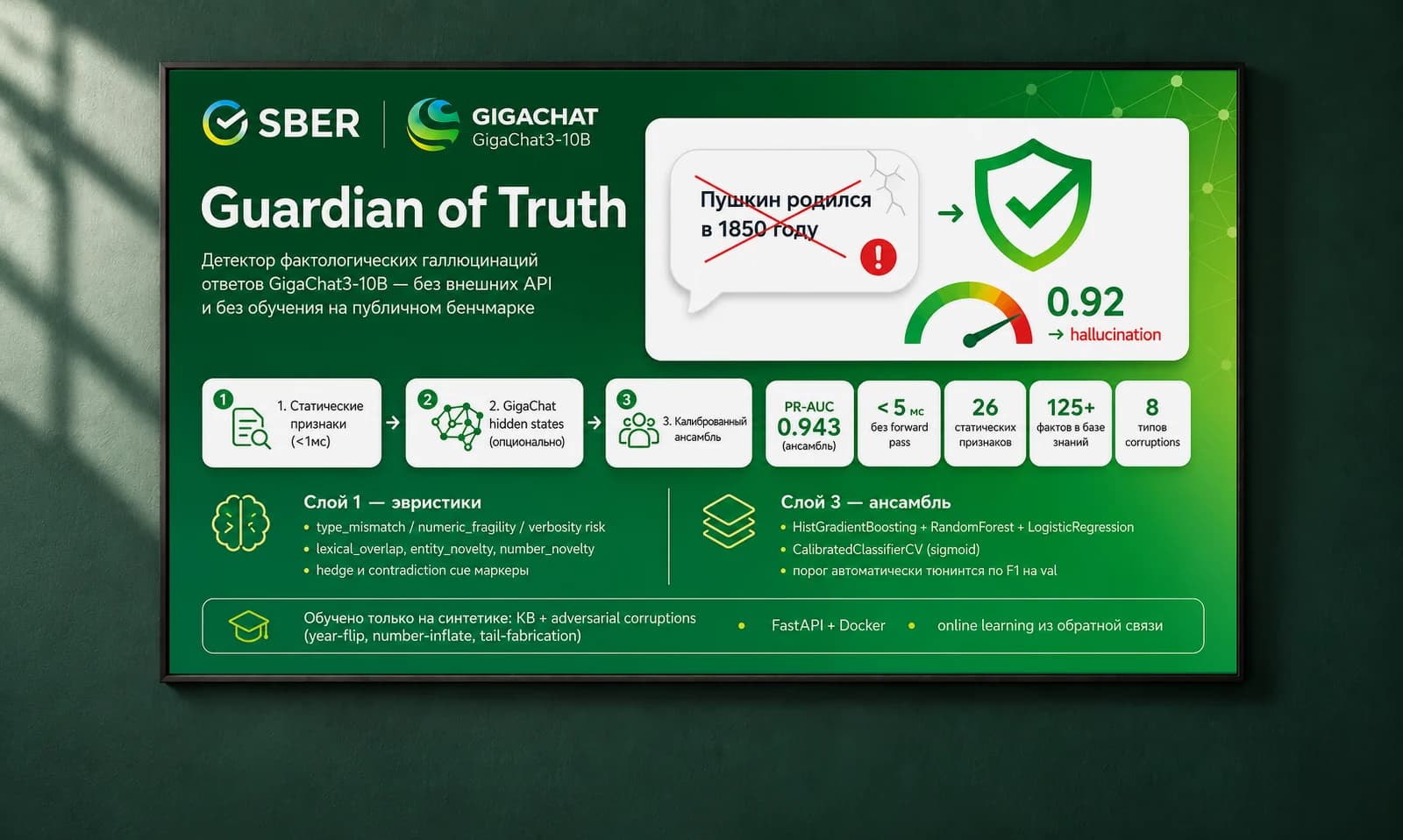
Sber — Guardian of Truth
Checks GigaChat answers for factual hallucinations and returns a probability of invented facts — no external APIs or fine-tuning.

MOEX Alpha Autopilot
An autonomous MOEX trading system: analyses the market, validates ideas and places trades on the live exchange with strict risk controls.
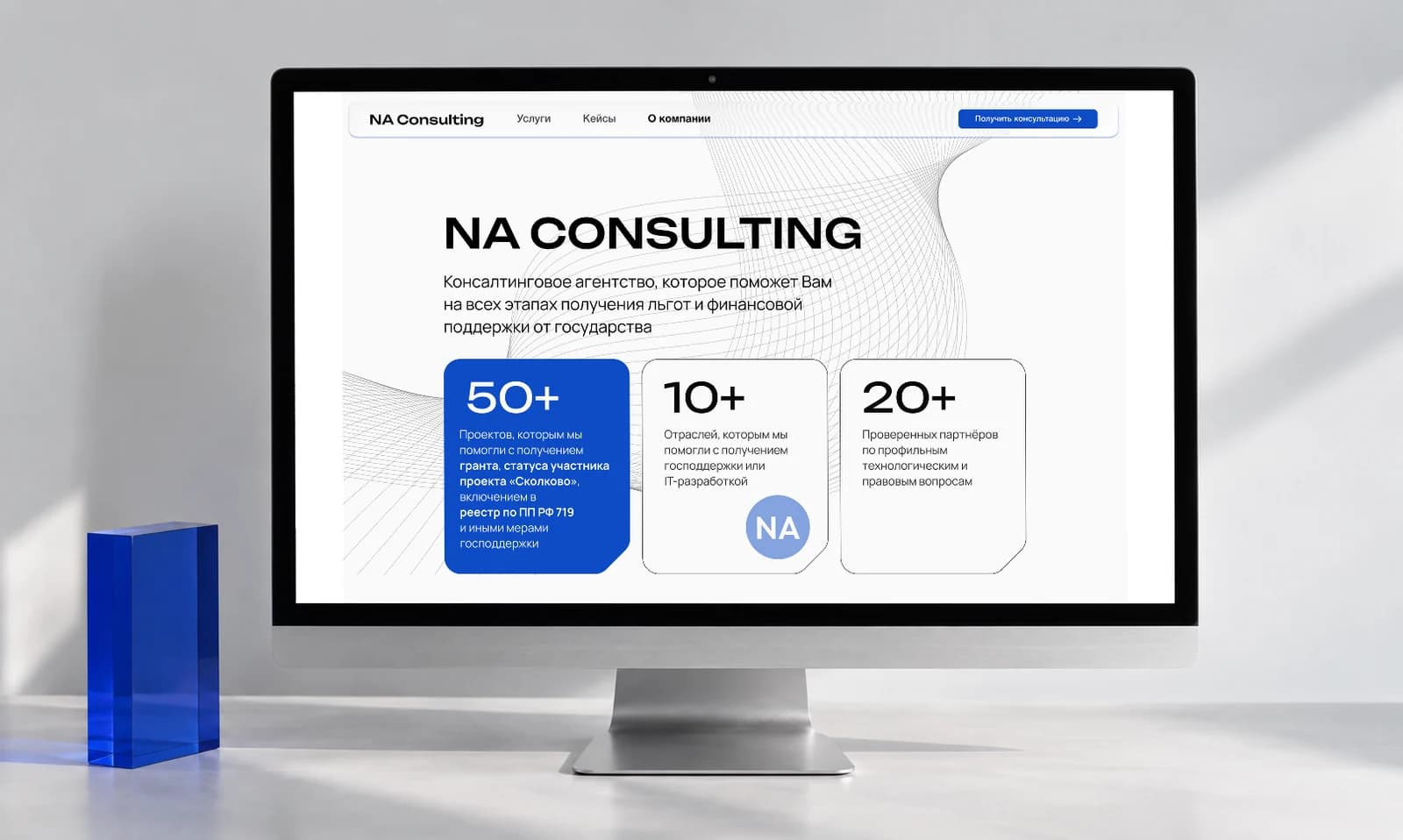
NA Consulting
A website for the NA Consulting agency. An interactive landing page packs the full story of the agency and its services into a minimalist layout. Calm colours convey trust and professionalism. Built by Veltos.Tech together with Aliya (finnikkis.github.io/maulaviyevadesign).
Frequently asked questions
How much does CTO as a service cost?
From ₽1,100 a month for 15 to 25 hours: founder calls, code review, hiring involvement and architecture decisions. Hours, and the price with them, grow if closer involvement is needed, active team hiring or investment-round prep, for example. Technical due diligence as a one-off service is scoped separately, typically from ₽800 for the report.
How is this different from IT consulting?
IT consulting is a one-off project with a defined result: an audit, a specification, an estimate. CTO as a service is ongoing, repeated involvement: you get a technical advisor who carries your product’s context month over month, rather than relearning it every time you reach out. Projects often start as consulting, a one-off audit, and move into the CTO format once ongoing rather than one-time technical support is what is actually needed.
Can an outsourced CTO write code?
In a limited capacity, sketching an architecture prototype or covering a critical gap during a transition, yes. But the format does not replace an in-house developer or lead: if the product needs someone writing code daily, that is a separate hiring or development task, one we would discuss separately if it comes up.
Does this fit an existing product, not just an early-stage startup?
Yes, especially when a technical director has left and no replacement is in place, or when the development team has grown but architecture decisions are still made ad hoc with no unified technical view. In those cases CTO as a service bridges the gap while a permanent hire is underway, or works as an ongoing arrangement when a full-time role is not justified by the company’s size.
How fast do you respond to urgent questions outside scheduled calls?
Part-time engagement means regular, not round-the-clock, access: we respond to important questions within a business day or two, not instantly. If your product needs decisions within hours rather than days, that is a sign you need an in-house technical lead rather than an outsourced consultant, and we will say so plainly at the brief.
Want to talk it through?
Tell us what needs building. We will work through the task, propose an approach and send a staged estimate. No charge, no commitment.
Related services
- IT consulting and product auditThe most expensive mistakes in software happen before the first line of code: a misread problem, a stack chosen out of a contractor’s habit, and a specification that does not exist. Consulting exists to settle all of that before the development meter starts running: what to build, out of what, at what cost and in which order. The result is a document, not an opinion on a call.
- Web app and Telegram Mini App developmentFor when a site is no longer enough and you need a product: an account area, a dashboard, an internal tool or a Mini App inside Telegram. We design the architecture, write the backend and frontend, and take it to release.
- AI strategy consultingMost companies have already run at least one AI pilot. A minority have taken even one pilot to stable, ongoing use. The gap usually is not the model, it is whether the process had a measurable payoff and whether the real running cost was worked out before starting. We help pick the right entry point so budget does not disappear into a demo that stays a demo.
Terms used on this page
Further reading
- CTO as a Service: When a Startup Needs Technical LeadershipA non-technical founder regularly makes technical decisions with no margin for error. CTO as a service is not a Series A luxury, it is a way of not paying for those mistakes later.
- Technical Due Diligence Before Investment or AcquisitionA codebase red flag rarely kills a deal outright — more often it changes the price, the escrow terms, or the post-close commitments. What gets reviewed, and why rushing it under deal pressure produces worse findings.
- How to Choose a Tech Stack: Criteria That Outlive the HypeA stack is a five-year commitment usually made in a single call. Here is the order the decisions should be taken in, the criteria that carry real weight, working stacks for six project archetypes and what a wrong choice costs.