
Development
Web app and Telegram Mini App development
For when a site is no longer enough and you need a product: an account area, a dashboard, an internal tool or a Mini App inside Telegram. We design the architecture, write the backend and frontend, and take it to release.
- Pricing
- From $280 · ≈ 20,000 ₽
- Timeline
- An MVP takes around 14 days. A full application with multiple roles, payments and integrations, from 6 weeks.
A starting price. The total depends on scope, integrations and deadlines.
In short
Web app and Telegram Mini App development starts at about $4,000, with an MVP in roughly 14 days. That covers architecture, API, database, frontend, admin panel, authentication and deployment. A Telegram Mini App differs in that authentication runs through Telegram and the interface follows platform rules, which removes the signup step entirely.
From idea to MVP
A first version exists to test a hypothesis, not to be complete. We help cut everything that can wait: we list the user journeys, mark the ones without which the product makes no sense, and build those first. The rest goes into an estimated backlog, so you can see what the project becomes next and what it will cost.
When a Telegram Mini App beats a website
A Mini App lives inside the messenger where your audience already is. No install, no signup: the user is authenticated by their Telegram account. That cuts drop-off at the entrance sharply and works well for booking services, shops, loyalty programmes, internal tools and anything driven by notifications.
The limits are real too: the interface follows platform guidelines and payments run through supported providers. We discuss that before starting, so nobody hits a Telegram rule halfway through the build.
An architecture someone can maintain
We write TypeScript on both sides, keep business logic separate from the interface, use database migrations and keep environments apart: local, staging, production. These are unglamorous things, but their absence is exactly why inherited projects become impossible to extend. The code and documentation go to you, so any other team can pick it up.
What the work includes
- A journey map and an agreed MVP scope
- Architecture design and data model
- API and backend with authentication and access control
- Application or Mini App frontend, responsive
- Admin panel for data and user management
- Integrations: payments, notifications, third-party services
- Dockerised deployment with separate environments
- Documentation, source code and credentials
How we work
- 01
Discovery
We work through the problem, the users and the constraints, and define what the first version actually tests.
- 02
Architecture and estimate
Data model, API, stack, infrastructure. A staged estimate plus a backlog for what comes later.
- 03
Interface design
Key screens, states, empty states and errors, which are the parts usually forgotten.
- 04
Sprint delivery
Iteratively, with a working build on staging at the end of each one.
- 05
QA and release
Functional testing, load testing where relevant, deployment and handover.
Technology and tools
- React
- Next.js
- TypeScript
- Node.js
- NestJS
- Go
- PostgreSQL
- MongoDB
- GraphQL
- Docker
- Kubernetes
- Nginx
Selected work
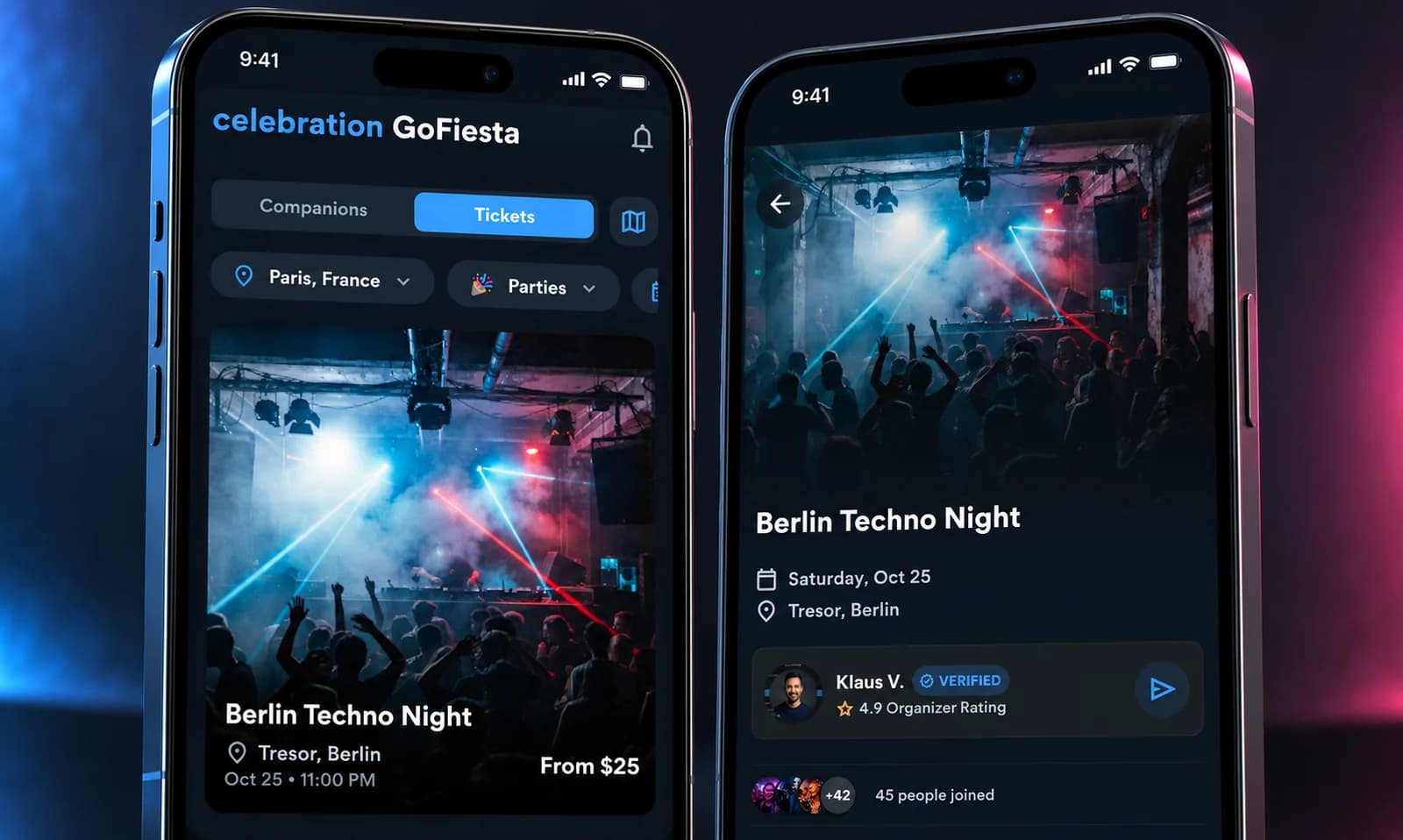
GoFiesta
A mobile app for finding parties and events abroad: tickets, travel companions and an organiser profile.
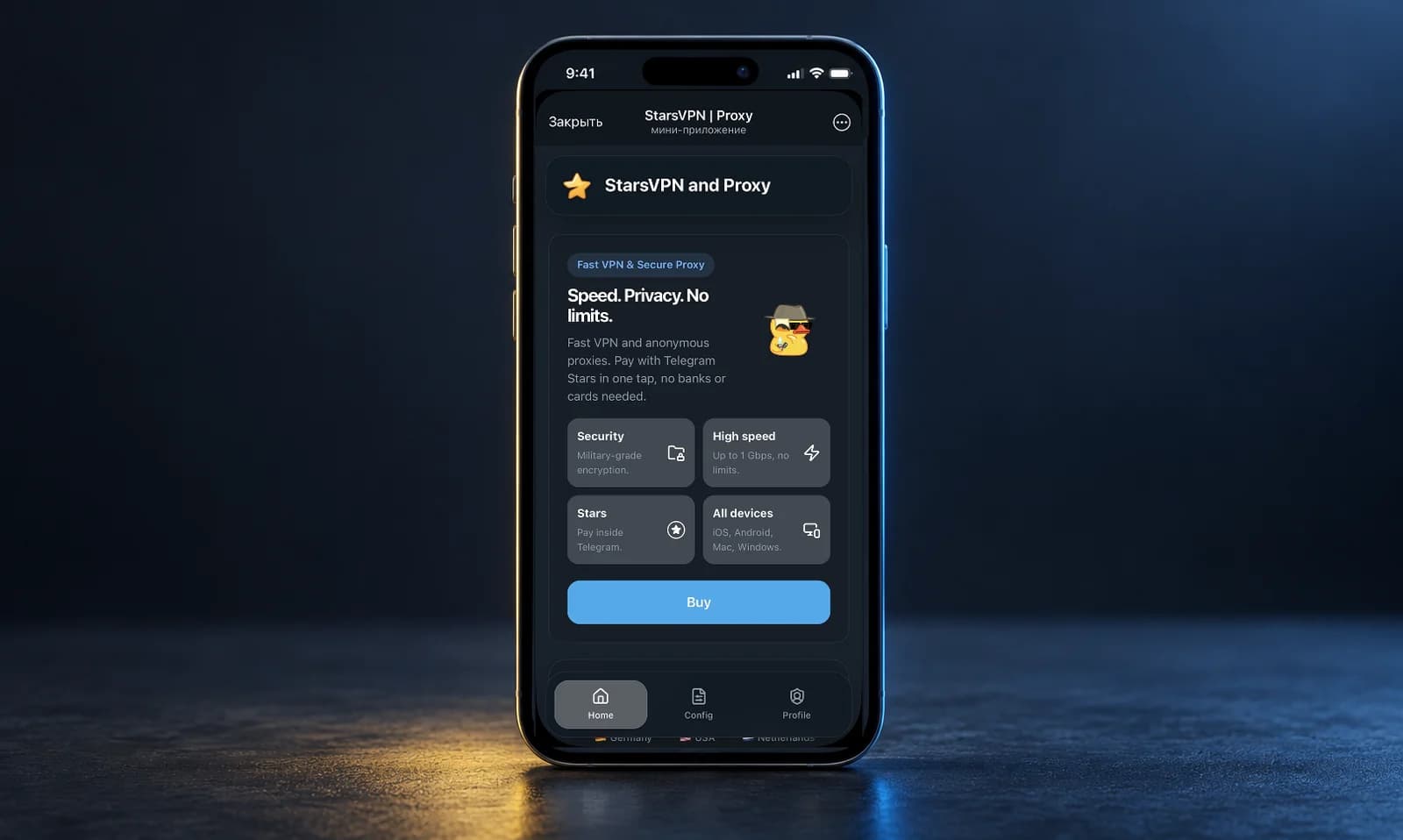
StarsVPN
A VPN and proxy service with a Telegram mini app: connect in a minute without manual server or protocol setup.
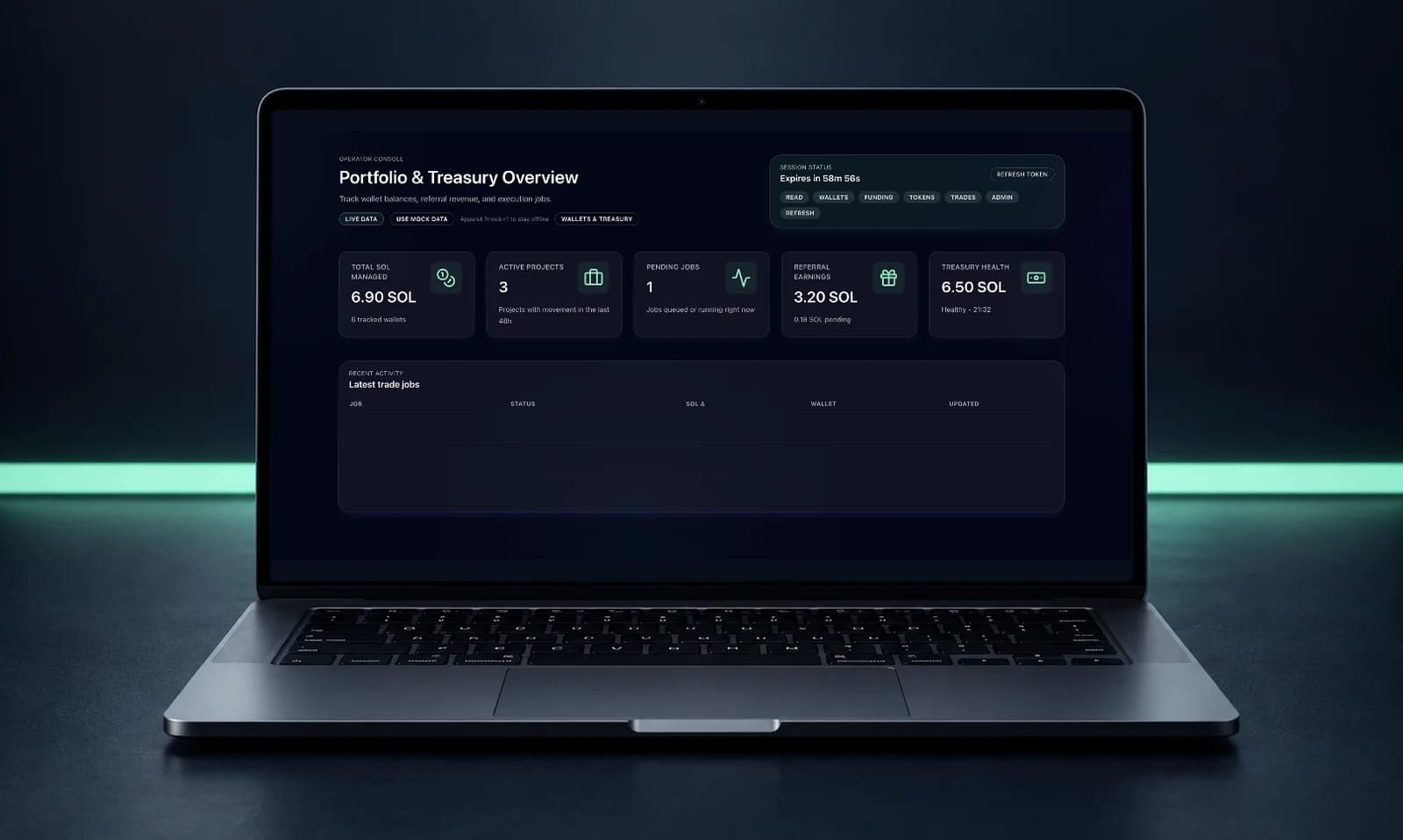
MultiLauncher
A Solana platform: launch tokens on PumpFun, trade from hundreds of wallets and distribute treasury privately via web app and Telegram bot.
Frequently asked questions
How much does a web app cost?
From about $4,000 for an MVP with one core journey, authentication, a database and an admin panel. The price grows with the number of user roles, integrations, load requirements and whether payments are involved. What drives an estimate is not the screen count but the logic: calculations, permissions, exchange with external systems. So we design first and give firm staged numbers after.
What is a Telegram Mini App and who is it for?
It is a web app that opens inside Telegram and uses its authentication. Nothing to download, nothing to sign up for, since the user is already logged in. It suits services that need a fast entry and repeat contact: booking, delivery, loyalty, shops, internal team tools, bots with a real interface. It does not suit cases needing device capabilities the web lacks, or a design that ignores the platform guidelines entirely.
How fast can an MVP ship?
Around 14 days if the scope is genuinely minimal: one core journey, one user role, no complex integrations. A realistic figure for most product MVPs is 4-6 weeks. You can go faster by cutting functionality, not by cutting the team. Trying to hit a date by skipping design and testing usually comes back as rework that costs more than the time saved.
Do you support the app after launch?
Yes, when you want it. Support can cover hosting and monitoring, dependency and security updates, bug fixing and new feature work. Terms are agreed separately, usually either monthly hours or a defined set of tasks. If you would rather run the project with your own team, we hand over code, documentation and access, and walk them through it if needed.
Can we start small and grow?
That is the preferred route. We split the project into stages where each one produces something that works, rather than half a system. After the first stage you can stop, change direction or continue. The architecture is planned for growth without being over-engineered for features that may never be built.
Want to talk it through?
Tell us what needs building. We will work through the task, propose an approach and send a staged estimate. No charge, no commitment.
Related services
- Website development, end to endWe build sites that still hold up a year later: from a one-page CMS build to a store or a web application on React and Next.js. One team for design, code, integrations and launch.
- Mobile app developmentiOS and Android apps from prototype to App Store and Google Play release. We help you choose between cross-platform and native based on the task rather than on fashion.
- AI and ML developmentWe build AI that solves a defined task and pays for itself, not demos for the sake of demos. Classifiers, recommendations, text and document processing, LLM assistants, and model integration into an existing product.
- UX/UI design for websites and appsWe design interfaces that survive contact with production: research, structure, UI kit and a clean handoff to the developers. Everything lives in Figma as components with real states and real breakpoints, not as a folder of flat mockups. The same process covers landing pages, corporate sites, e-commerce, web apps and mobile.
Terms used on this page
- MicroservicesMicroservices are an architecture in which an application is split into several independent services, each with its own data and release cycle: they talk over the network through APIs, deploy separately and scale individually, but they demand mature infrastructure.
- MonolithA monolith is an application built and deployed as a single unit: all the code lives in one repository, runs in one process and works against one database, releasing as a whole, which buys simplicity at the cost of coupling.
- Product backlogA product backlog is a priority-ordered list of everything that could be built into a product: it is not a dated plan, it is continuously revised, and one person, the product owner, is accountable for the order of it.
- Technical specificationA technical specification is the document that fixes what exactly will be built and on what grounds the work counts as accepted: goals, roles, scenarios, screen-level requirements, integrations, non-functional requirements and an explicit out-of-scope section.
- AI agentAn AI agent is a program in which a language model does not merely answer but acts: it receives a goal, chooses its own tools such as search, APIs, a database or sending mail, works through steps in a loop and stops when the task is done or a limit is hit.
- APIAn API is a fixed set of rules by which one program requests data or actions from another: method addresses, request and response formats, authentication and rate limits, documented so that both sides can evolve independently.
Further reading
- MVP in 2026: Real Timelines, Real Budgets and What to CutMVP no longer means cheap and rough. A weak prototype today produces a false negative and buries a workable idea. Here are four MVP tiers with prices and timelines, a framework for cutting scope, and the parts no budget justifies removing.
- How to Choose a Tech Stack: Criteria That Outlive the HypeA stack is a five-year commitment usually made in a single call. Here is the order the decisions should be taken in, the criteria that carry real weight, working stacks for six project archetypes and what a wrong choice costs.
- Telegram Mini Apps for Business: Who Needs One and What It CostsA Mini App is a web application living inside Telegram with no store review and no install. We cover how it differs from a bot and a mobile app, which mechanics work, how authentication is built and what development costs.