
Development
Website development, end to end
We build sites that still hold up a year later: from a one-page CMS build to a store or a web application on React and Next.js. One team for design, code, integrations and launch.
- Pricing
- From $200 · ≈ 15,000 ₽
- Timeline
- A CMS landing page takes around 4 days, a corporate site or store around 7, a web application from 14 days. Timelines run from approved content and a signed-off prototype.
A starting price. The total depends on scope, integrations and deadlines.
In short
A turnkey website at Veltos.Tech starts at about $700 for a CMS landing page, $1,400 for a corporate site or online store, and $4,000 for a web application. That covers design, markup, code, integrations, an SEO baseline and deployment. Typical timelines: a landing page in around 4 days, a store in around 7, a Mini App in around 14.
What we build
We are not tied to one project type. The task decides the stack and the scope: sometimes a clean CMS build is enough, sometimes you need a custom frontend, an API and an admin panel.
- Landing and promo pages for a campaign or a single product launch
- Corporate sites structured around services, cases and organic traffic
- Online stores with catalogue, cart, payments, delivery and an order admin
- Web apps and Telegram Mini Apps: dashboards, accounts, internal services
- Improvements to an existing site, without a rewrite from scratch
CMS or custom build
A CMS (Tilda, WordPress, Bitrix, Shopify) wins when you need to test demand fast and a marketer will edit content without a developer. The cost is a ceiling: performance, non-standard logic and deep integrations get hard.
A custom build on React and Next.js pays off when the site is part of the product: custom calculations, user accounts, real traffic, tight Core Web Vitals work or integrations with internal systems. We will tell you which option is actually cheaper for your case rather than upsell the expensive one.
SEO goes in during the build
Rebuilding a site structure after launch costs more than getting it right the first time. So keyword research and section structure are discussed before design, and the technical baseline — unique titles and descriptions, Schema.org markup, canonicals, hreflang for both languages, sitemap.xml, robots.txt, server rendering and optimised images — is part of the standard build.
Speed is planned in too: server rendering instead of a heavy client-side app, lazy media loading, modern image formats. It moves both rankings and conversion.
After launch
A site with no traffic is a business card in a vacuum. After release we can take on promotion: SEO and GEO work, paid ads, SMM and ad creatives. Or we hand the project to your team with documentation and access, which is a perfectly normal outcome.
What the work includes
- Prototype and Figma designs for desktop and mobile
- Responsive markup, checked across browsers
- Lead forms with validation and email or Telegram notifications
- A content admin panel, or a connected CMS
- Technical SEO baseline: metadata, Schema.org, sitemap, robots, canonicals
- Analytics wired up: Yandex.Metrica and Google Analytics
- Deployment to your hosting or ours, with HTTPS and the domain
- Source code, credentials and short handover documentation
How we work
- 01
Brief and estimate
We work through the goal, the audience and the constraints. You get a site structure, a staged estimate and a timeline. No charge.
- 02
Structure and prototype
Keyword research and a page map first, then a prototype of the key screens. This is the cheapest point to change your mind.
- 03
Design
Desktop and mobile layouts, component states, a UI kit for repeating blocks.
- 04
Build and integrations
Markup, code, CMS or admin panel, payments, CRM, analytics. Progress is visible on a staging URL throughout.
- 05
QA and launch
Device testing, performance, forms, indexability. Then we move to the live domain and hand over access.
Technology and tools
- React
- Next.js
- TypeScript
- Vue
- Nuxt
- Node.js
- NestJS
- PostgreSQL
- Tailwind CSS
- Three.js
- Docker
- Tilda
- WordPress
- Bitrix
- Shopify
Selected work
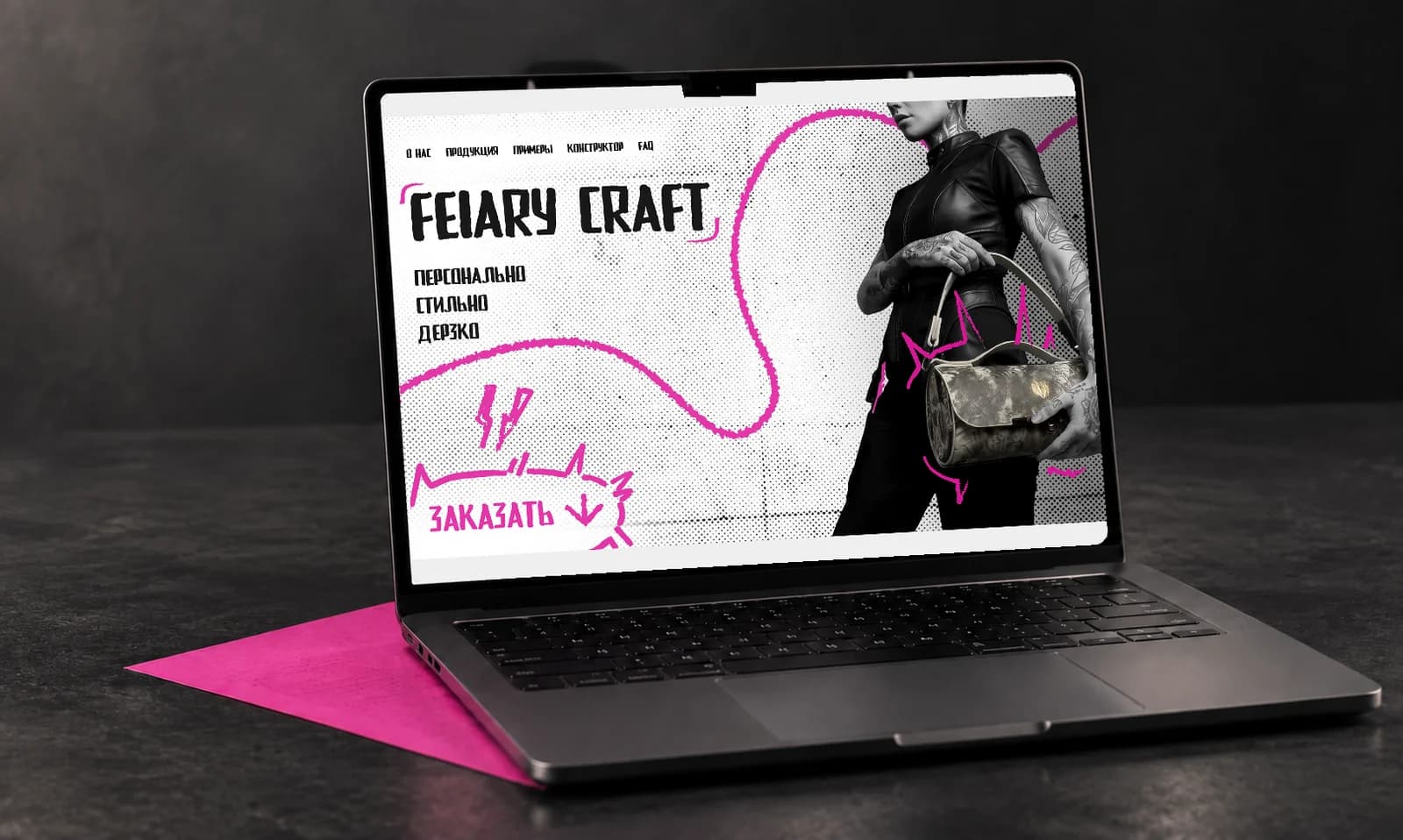
FEIARY Craft
Design for a leather accessories store. The style echoes street and tattoo art to tie the products to a bold youth aesthetic, while the palette signals premium quality. Built by Veltos.Tech together with Makar.
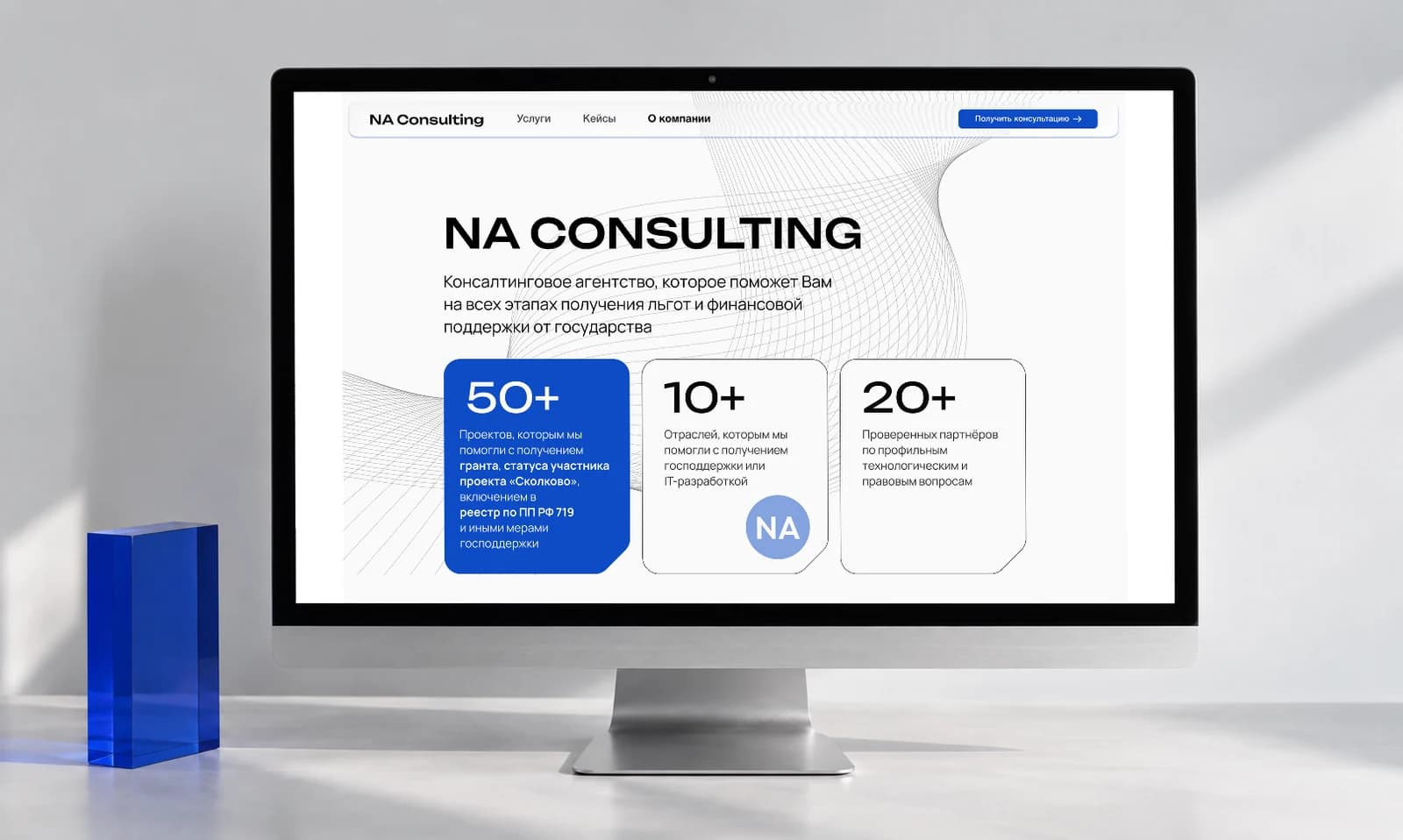
NA Consulting
A website for the NA Consulting agency. An interactive landing page packs the full story of the agency and its services into a minimalist layout. Calm colours convey trust and professionalism. Built by Veltos.Tech together with Aliya (finnikkis.github.io/maulaviyevadesign).
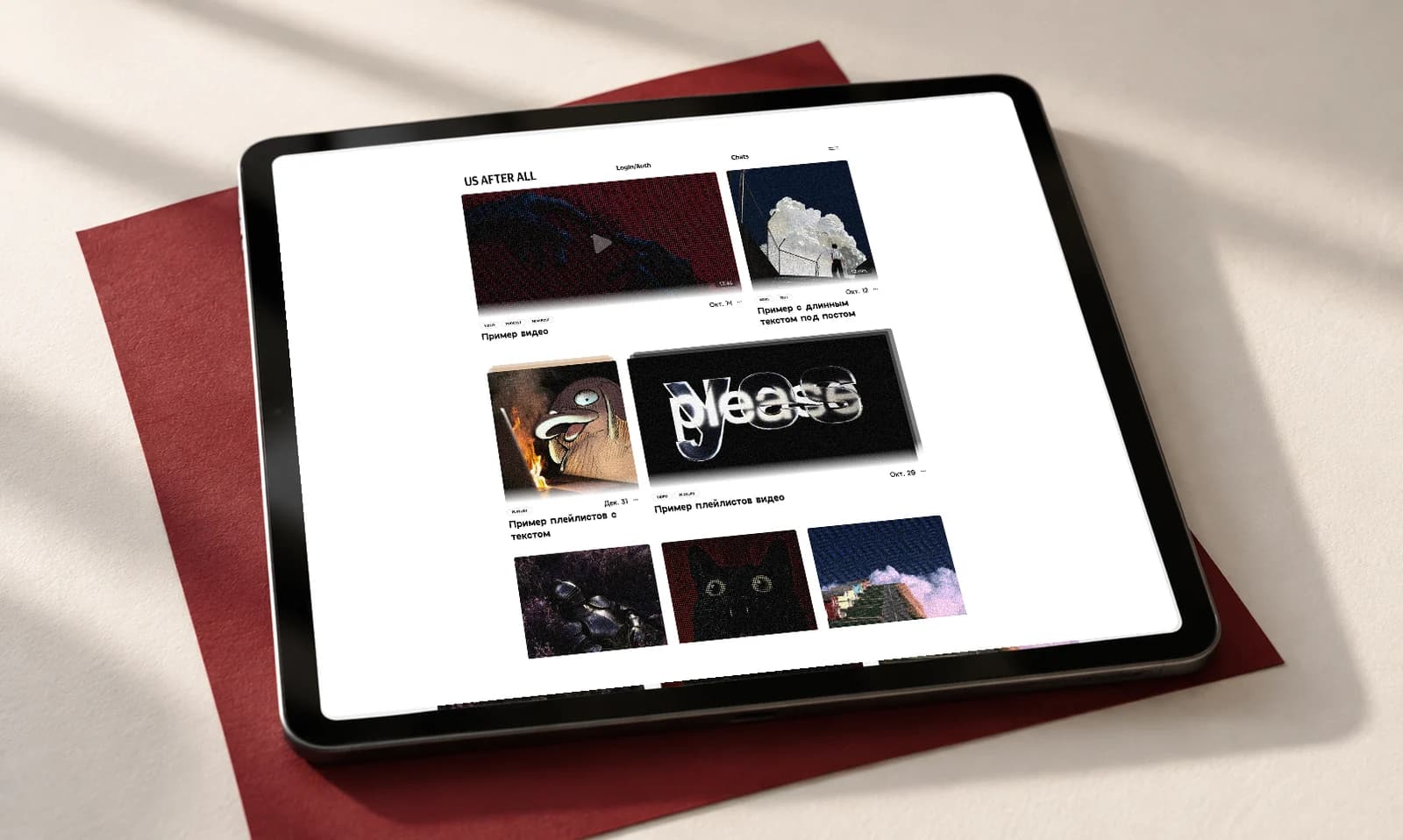
Us After All
A website for the Us After All news agency — a simple, minimalist daily news hub with articles, video, audiobooks and full playlists in one place.
Frequently asked questions
How much does a website cost?
A CMS landing page starts at about $700, a corporate site or online store at $1,400, a web app or Telegram Mini App at $4,000. These are entry points. The final number depends on page count, design complexity, integrations (payments, CRM, ERP, inventory) and how fast you need it. After a short brief we send a staged estimate that shows what each part costs, so nothing appears mid-project.
How long does development take?
Roughly: a landing page in 4 days, a corporate site or store in 7, a Mini App in 14. Mobile apps and AI/ML projects are scoped separately. The usual cause of delay is not code, it is content and approvals. If copy, photography and legal text are ready at the start, the schedule holds. Stages go into the contract and you see progress on a staging URL.
Do you build on a CMS or write custom code?
Both, depending on the job. A CMS (Tilda, WordPress, Bitrix, Shopify) fits when launch speed and self-service content editing matter most. A custom React and Next.js build is the answer when you have non-standard logic, user accounts, real performance requirements or integrations with internal systems. At the brief stage we explain the difference in total cost of ownership, not just the build price.
Will the site be search-optimised?
The technical baseline is part of the build: unique titles and descriptions, a clean heading structure, Schema.org markup, canonicals, sitemap.xml, robots.txt, hreflang across both languages, server rendering, compressed images and analytics. That is what lets a site index properly. Ongoing promotion — cluster-level keyword work, content, links, Yandex.Webmaster and Search Console — is a separate service.
What if I already have a site?
A rewrite is often unnecessary. We audit the site and say plainly whether improving it or replacing it is cheaper. Improvement means new blocks and pages, speed work, fixing technical SEO errors, integrations, responsive fixes, a design refresh. A rewrite is justified when the current code cannot be maintained or the platform blocks what you need. See the website support and improvement service.
Who owns the source code?
You do. On final payment you receive the source code, access to hosting, domain, analytics and the admin panel, plus short documentation covering how to run and deploy it. We do not hold projects hostage or lock you into our support: if you continue with another team, they will have everything they need.
Want to talk it through?
Tell us what needs building. We will work through the task, propose an approach and send a staged estimate. No charge, no commitment.
Related services
- Landing page developmentOne page, one goal: the enquiry. We build the landing around a specific offer and the traffic you plan to send at it, whether that is search ads, paid social, organic or email.
- E-commerce developmentA store is not a shop window, it is an operational tool: catalogue, payments, delivery, stock and orders have to work as one. We build it so your team can run it without a developer.
- Web app and Telegram Mini App developmentFor when a site is no longer enough and you need a product: an account area, a dashboard, an internal tool or a Mini App inside Telegram. We design the architecture, write the backend and frontend, and take it to release.
- UX/UI design for websites and appsWe design interfaces that survive contact with production: research, structure, UI kit and a clean handoff to the developers. Everything lives in Figma as components with real states and real breakpoints, not as a folder of flat mockups. The same process covers landing pages, corporate sites, e-commerce, web apps and mobile.
Terms used on this page
- Russian personal data law (152-FZ)152-FZ is the Russian personal data law: it requires that data on Russian citizens be collected in databases located in Russia, that the regulator be notified of processing, that consent be obtained separately, and that any breach be reported within 24 hours.
- Responsive designResponsive design is an approach where a single layout reorganises itself to the viewport: grid, typography and block order change at defined breakpoints instead of sending the visitor to a separate mobile version on its own subdomain.
- WireframeA wireframe is a rough screen schematic without colour, typography or imagery: it fixes which blocks exist, their priority and the transitions between screens, so the interface logic is agreed before expensive visual design starts.
- Design systemA design system is a set of tokens, components and usage rules that exists simultaneously in the design files and in code, fixing colours, typography, spacing and element states so that a new screen is assembled from existing parts rather than reinvented.
- Commercial ranking factorsCommercial ranking factors are the group of signals Yandex applies to commercial queries: visible prices, assortment breadth, contact and company details, delivery and payment terms, reviews and live chat, in other words evidence that buying here is actually possible.
- Legacy codeLegacy code is working code that is expensive to change: it runs on an outdated stack, has no test coverage or has lost its authors, so every edit means reconstructing the logic from the source and risks breaking something unrelated.
Further reading
- What a Website Actually Costs in 2026: The Estimate, Line by LineA practical breakdown of a web development estimate: what analytics, design, front end, back end and integrations actually cost, which expenses always show up after launch, and where cutting the budget is safe.
- How to Choose a Tech Stack: Criteria That Outlive the HypeA stack is a five-year commitment usually made in a single call. Here is the order the decisions should be taken in, the criteria that carry real weight, working stacks for six project archetypes and what a wrong choice costs.
- What to Build Your Site On in 2026: Tilda, WordPress, Bitrix or Next.jsBuilder, CMS or custom code is not a matter of taste but of scenario and planning horizon. We break down three-year cost of ownership, the ceiling of each platform, and what it costs to move if you picked wrong.