
Consulting
Marketplace consulting: Ozon and Wildberries
On marketplaces it is easy to lose money before the first sale: the wrong platform for the product, a card missing the attributes buyers filter by, a fulfilment scheme that eats the entire margin in logistics. We work through the economics and launch strategy before you go live, not after the damage is done.
- Pricing
- From $540 · ≈ 40,000 ₽
- Timeline
- A review of one or two product categories takes 1 week. Full consulting with card mapping and a promotion plan across several SKUs takes 2 weeks.
A starting price. The total depends on scope, integrations and deadlines.
In short
Marketplace consulting starts at ₽540 and takes 1 to 2 weeks: platform choice for the product category, unit economics accounting for commission, logistics and returns, an audit or structure for product cards, fulfilment scheme (FBO/FBS), and an in-platform promotion plan. The result is a decision on whether launching this product makes sense at all, and if so, how.
Ozon or Wildberries: choosing the platform
The platforms differ in audience and which categories genuinely sell. Wildberries skews toward accessories, cosmetics and women’s clothing. Ozon skews toward home goods, children’s products and electronics. It is not a hard rule, but a starting point: the product category largely decides where organic demand is higher and customer acquisition cheaper.
Commission rates, card content requirements and internal search ranking logic also differ between platforms, and they change more often than anyone would like. We check current terms at the time of launch rather than rely on what was true six months ago.
Unit economics: real profit, not revenue
Sellers often watch revenue and miss that real profit per unit is eaten by platform commission, logistics (delivery to the warehouse, between warehouses, to the buyer), payment processing, storage, fines and, critically, returns, which in clothing and footwear can run to a third of orders. We work the economics per SKU including all of these line items before the product ever goes live.
If the honest calculation shows a negative or razor-thin margin, we say so at the consultation stage, not after you have bought the stock and paid for the first month of storage. Sometimes the answer is not "do not launch" but adjusting the price, packaging or fulfilment scheme until the economics actually work.
- Platform commission for the specific category, not an averaged figure
- Logistics: to the warehouse, between warehouses, to the buyer and back
- Storage, payment processing and typical compliance fines
- Expected return rate for the product category
- Per-unit margin after every deduction
Product cards and in-platform promotion
A marketplace card works as a search-results page and a product page at once: the title and attributes decide whether the product gets found at all, while photos, video and description decide whether it gets bought once found. We review or build the card structure: the attributes required for filters, infographics, photo order and content, and card video where the platform format supports it.
In-platform promotion is not paid social advertising, it runs on its own mechanics: the platform’s internal ad campaigns, participation in promotions, and managing reviews and rating. We provide a starting plan: where to begin with budget, which formats to test first, and how to read the platform’s own statistics so budget is not spent driving traffic to a card that is not ready to convert it.
What the work includes
- A platform recommendation (Ozon, Wildberries or both) for your category
- Unit economics per SKU accounting for every cost line
- Fulfilment scheme recommendation: FBO, FBS or a hybrid
- Product card structure or audit: attributes, photos, infographics
- An in-platform promotion plan for the first month
- A review of common platform fines and requirements that are easy to breach unknowingly
- A document with the calculations and recommendations you can hand to your team
How we work
- 01
Product brief
We work through the category, unit cost, target price and first batch volume.
- 02
Platform choice and economics
We calculate unit economics against each platform’s current commission and logistics rates.
- 03
Card and fulfilment
We work out the card structure and recommend an FBO/FBS fulfilment scheme.
- 04
Promotion plan
We put together a first-month plan: budget, formats, review management.
- 05
Handover
We hand over the document with calculations and recommendations and walk through it on a call.
Technology and tools
- Ozon Seller
- Wildberries Партнёры
- MoySklad
- Google Sheets
- MPStats / Wildbox (по запросу)
Selected work
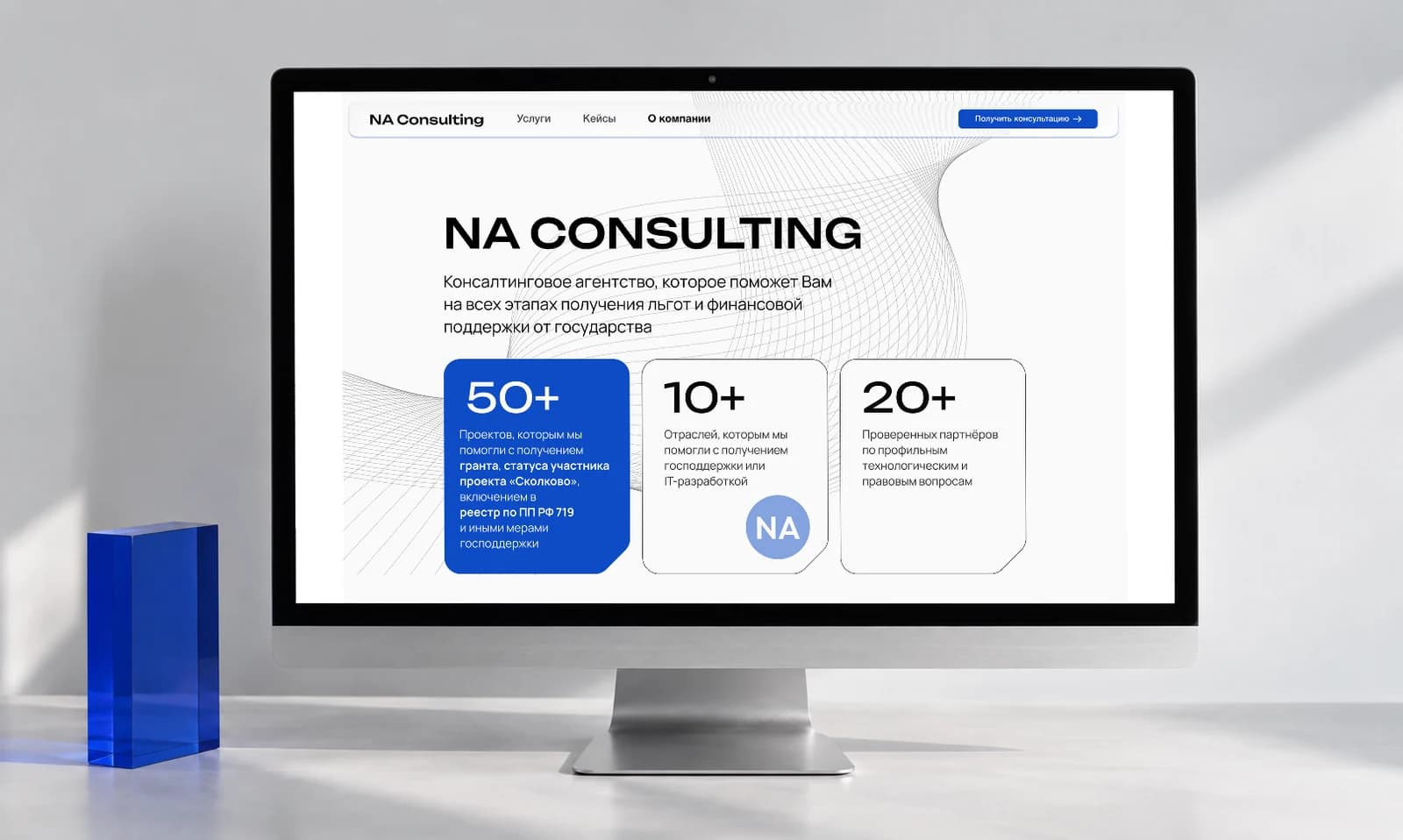
NA Consulting
A website for the NA Consulting agency. An interactive landing page packs the full story of the agency and its services into a minimalist layout. Calm colours convey trust and professionalism. Built by Veltos.Tech together with Aliya (finnikkis.github.io/maulaviyevadesign).
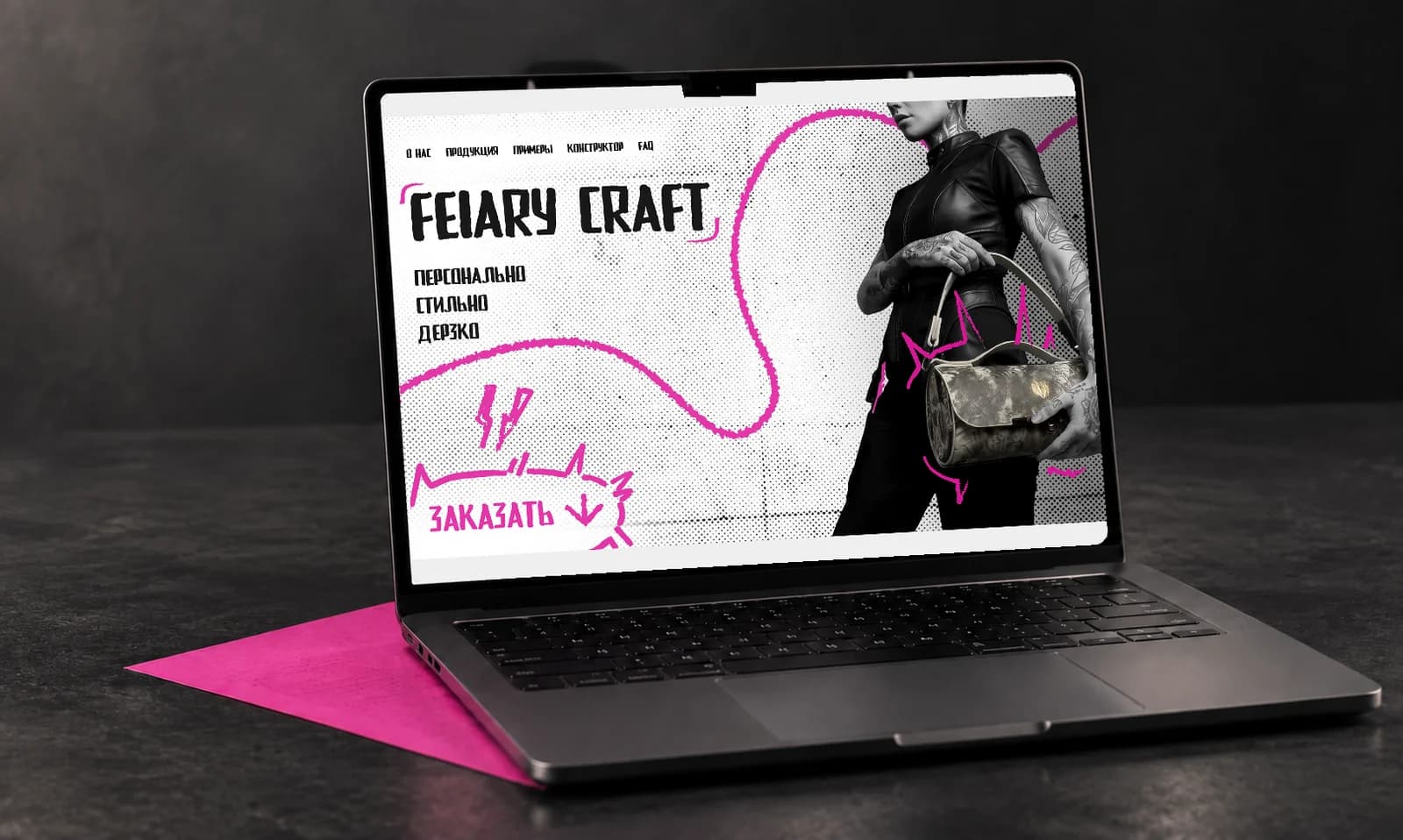
FEIARY Craft
Design for a leather accessories store. The style echoes street and tattoo art to tie the products to a bold youth aesthetic, while the palette signals premium quality. Built by Veltos.Tech together with Makar.
Frequently asked questions
How much does marketplace consulting cost?
From ₽540 for a review of one or two product categories with unit economics, a platform recommendation and card structure. Full consulting with a promotion plan across several SKUs starts at ₽950. The price does not depend on planned sales volume, it depends on the number of product categories and platforms to work through.
Ozon or Wildberries, where should we start?
It depends on the category. Wildberries has historically been stronger for clothing, footwear, accessories and cosmetics. Ozon for home goods, children’s products and electronics. That is a starting point, not a guarantee: commissions, competition within your specific niche and current platform terms shift, so we give the final recommendation after calculating unit economics on current terms, not from a general rule.
What are FBO and FBS, and which should we pick?
FBO means the product sits in the platform’s warehouse, and the platform picks and ships the order itself; simpler for the seller, but it requires shipping stock ahead of time and paying for storage. FBS means you store and pack orders yourself and the platform only delivers; lower storage cost but more operational load and more risk of missing a shipping window. The choice depends on turnover, warehouse capacity and staffing: we run both scenarios through the unit economics and recommend whichever is actually more profitable for your product.
Do you run ongoing promotion or only consult?
This format is one-off consulting before launch or when entering a new category: calculations, recommendations and a first-month plan. Ongoing management of in-platform ad campaigns and card optimisation based on actual sales is a separate service, worth discussing once you have live data on conversion and returns to optimise against.
If the economics do not work, will you just say "don’t launch"?
Sometimes, yes, if the product is genuinely unprofitable on a marketplace at any reasonable price, for instance an unusually high return rate for its category, or a logistics burden that is too heavy for its size and weight. But more often, negative economics gets fixed by a change: a different price, different packaging, a different fulfilment scheme, or a different platform. We show both scenarios, with and without the changes, and the decision stays yours.
Want to talk it through?
Tell us what needs building. We will work through the task, propose an approach and send a staged estimate. No charge, no commitment.
Related services
- IT consulting and product auditThe most expensive mistakes in software happen before the first line of code: a misread problem, a stack chosen out of a contractor’s habit, and a specification that does not exist. Consulting exists to settle all of that before the development meter starts running: what to build, out of what, at what cost and in which order. The result is a document, not an opinion on a call.
- E-commerce developmentA store is not a shop window, it is an operational tool: catalogue, payments, delivery, stock and orders have to work as one. We build it so your team can run it without a developer.
- Targeted and search advertisingPaid advertising brings traffic the day after launch, and burns budget just as fast when audiences are guessed at and nobody counts the leads. We build campaigns in the channels that genuinely work in Russia in 2026: VK Ads, Telegram Ads and Yandex Direct, plus Meta and Google Ads for projects selling abroad. Tracking goes in before launch, not after.
- UX/UI design for websites and appsWe design interfaces that survive contact with production: research, structure, UI kit and a clean handoff to the developers. Everything lives in Figma as components with real states and real breakpoints, not as a folder of flat mockups. The same process covers landing pages, corporate sites, e-commerce, web apps and mobile.
Terms used on this page
Further reading
- Ozon or Wildberries: Which Platform to Start OnThis is not "which platform is better" — it is "which one fits your specific product category." A guide to choosing without losing your first batch on the wrong bet.
- Marketplace Seller Unit Economics: Calculating Real ProfitRevenue climbs but the bank balance does not — the classic sign nobody worked out the full unit economics. A line-by-line breakdown with a concrete worked example.