
Promotion
Targeted and search advertising
Paid advertising brings traffic the day after launch, and burns budget just as fast when audiences are guessed at and nobody counts the leads. We build campaigns in the channels that genuinely work in Russia in 2026: VK Ads, Telegram Ads and Yandex Direct, plus Meta and Google Ads for projects selling abroad. Tracking goes in before launch, not after.
- Pricing
- From $160 · ≈ 12,000 ₽
- Timeline
- From brief to launch takes 7 to 10 working days, including 2 to 3 days for moderation and ad labelling. The test period runs 2 to 3 weeks, long enough to find the working pairings and learn the real cost per lead. Cost per lead usually settles by the end of month two.
A starting price. The total depends on scope, integrations and deadlines.
In short
Ad setup starts at ₽40,000 for the launch: audience research, campaign structure, 6 to 12 creatives and analytics wiring. Inside Russia three channels actually work: VK Ads, Telegram Ads and Yandex Direct. Meta is banned there and only makes sense for international campaigns. Plan 2 to 3 weeks and ₽30,000 to ₽50,000 of media spend for the first test, otherwise the algorithms never get enough data to learn.
The channels that work in Russia in 2026
The market has narrowed, which makes the choice simpler. VK Ads is the merged cabinet that absorbed myTarget and the old VKontakte panel: widest reach, cheapest impressions, works for both community subscriptions and site leads. Telegram Ads delivers a high quality but expensive audience and is strongest at growing a channel. Yandex Direct covers search and the display network, and is the only channel that captures demand that already exists.
Meta needs to be stated plainly: the company is banned in Russia and running ads from its platform to a Russian audience is neither available nor legal. We set up Meta Ads only for projects with an audience abroad, such as SaaS, services for English-speaking markets or export e-commerce. If a contractor offers to run Instagram ads targeting Russia, end the conversation there.
Telegram Ads deserves a note of its own. The official platform is bought through resellers and the entry threshold is noticeably higher than VK, so smaller budgets often do better with direct placements in topical channels, where the price is negotiated with the owner and results are counted through UTM clicks and subscriptions. We run both and will tell you honestly which is cheaper in your case.
- VK Ads: reach, look-alikes from your own database, retargeting, lead forms and site traffic.
- Telegram Ads and direct channel placements: subscriptions, B2B, high-ticket services, info products.
- Yandex Direct: search, display network, retargeting and product feed campaigns for e-commerce.
- Also available: Yandex Business and Maps for local demand, Avito for product categories.
- Meta Ads and Google Ads: international markets only.
Audiences: where the segments come from
Targeting men aged 25 to 45 in Moscow interested in business is not targeting, it is a way to spend money. We build five to ten segment hypotheses and test them in parallel at low bids: your own customer database and look-alikes built from it, site visitors split by engagement depth, subscribers of competing communities, members of topical groups, keyword-based audiences in VK Ads and in-app behaviour segments.
The cheapest leads almost always come from warm segments: retargeting people who visited the site without converting, and look-alikes built from CRM buyers. So the first thing we ask for is a customer export. Even 300 rows is enough to seed a look-alike in VK Ads.
- Data-driven segments: CRM exports, pixel events, on-site actions and offline conversions.
- Interest and behaviour segments: communities, keyword phrases and app usage.
- Exclusions: existing customers, out-of-scope regions and job seekers.
- Separate campaigns for warm and cold audiences, each with its own offer and goal.
Creatives and offers
We launch with 6 to 12 creatives: three or four distinct offers, each in two or three visual treatments. What gets tested first is the message, not the picture. A free measurement within 24 hours and interest-free instalments are different promises, and the gap in cost per lead between them is usually wider than between two backgrounds of the same layout.
For VK and Telegram we also produce vertical videos under 15 seconds, which buy reach more cheaply and hold attention better than static images. When there is nothing to film, we assemble clips from graphics, motion design and AI generation, and the same material later feeds the social content plan.
Ad labelling is mandatory: every online ad in Russia needs an erid token registered with an authorised operator. VK Ads and Yandex Direct handle it automatically, while blogger and Telegram channel placements have to be registered manually. We take that on and file the reporting alongside the spend statistics.
Analytics: without it there is nothing to optimise
Before launch we wire up measurement: Yandex Metrica with goals for form submissions, calls and messenger contacts, a single consistent UTM scheme, and lead delivery into the CRM with the source preserved. Call tracking goes in for phone-heavy businesses, and e-commerce tracking with offline conversion upload for online stores.
From there we watch the chain rather than the CTR: impressions, clicks, leads, qualified leads, deals. A campaign with a great CTR and zero deals gets switched off, and one with expensive clicks but better conversion to payment gets scaled. That is why CRM access, or at minimum regular feedback on lead quality, matters more than any setting inside the ad cabinet.
- Yandex Metrica: goals, session replay, segments and a direct link to Yandex Direct.
- End-to-end attribution through to the deal, when the CRM tracks statuses.
- Call tracking for categories where people call more often than they type.
- A dashboard with spend, cost per lead and ROMI by channel.
Iteration: what happens after launch
The first 7 to 10 days are algorithm learning, and aggressive edits only get in the way. We watch delivery and placements, cut obvious junk inventory in the display networks, but leave the structure alone. Once there is data, a weekly cycle begins: review audience and creative pairings, switch off the unprofitable ones, raise bids on the winners and ship a fresh batch of hypotheses.
The realistic picture: out of ten pairings at launch, two or three work and produce most of the leads. The job of the first three weeks is to find them without spending the whole budget doing it. After that the work shifts to creative, because any pairing fatigues within three to six weeks and needs refreshing before the cost per lead starts climbing.
What the work includes
- Media plan: channels, budget split, reach forecast and a cost per lead range
- Audience map: 5 to 10 segments with collection logic and exclusion rules
- 6 to 12 creatives: static and vertical video for each offer
- Live campaigns with a transparent structure and readable naming conventions
- Configured analytics: Metrica goals, UTM scheme, pixels and CRM lead delivery
- Ad labelling: erid tokens obtained and statutory reporting filed
- Weekly report: spend, leads, cost per lead, what was paused and what was launched
- Account handover: every ad account stays registered to your company and under your access
How we work
- 01
Brief and measurement
Days 1 to 4. We go through the product, pricing, geography and existing data, review the CRM export, check the landing page and set up goals and UTMs. If the site is not ready to receive traffic, we say so before launch.
- 02
Strategy and creative
Days 5 to 10. We build the media plan, segments and offers, produce 6 to 12 creatives, agree copy and visuals, then clear moderation and ad labelling.
- 03
Launch and test
Weeks 2 to 4. We start with budget spread across hypotheses, let the algorithms learn and monitor delivery and placement quality daily.
- 04
Optimisation
From week 4. A weekly cycle: cut unprofitable pairings, scale the winners, refresh creative before fatigue sets in and drive the cost per lead down.
- 05
Scaling
From month 2. We widen geography and segments, add a second channel on top of the proven audiences and offers, and layer in funnel-stage retargeting.
Technology and tools
- VK Ads
- Telegram Ads
- Яндекс Директ
- Яндекс.Метрика
- Яндекс Аудитории
- Google Ads
- Meta Ads
- Calltouch
- amoCRM / Bitrix24
- Figma
Selected work

Cyber Lady
Posters for the Colizeum network of esports clubs and arenas. A dedicated banner with promotions for International Women’s Day — warm yellow and pink tones evoke femininity and a welcoming feel inside the club.

FEIARY Craft
Design for a leather accessories store. The style echoes street and tattoo art to tie the products to a bold youth aesthetic, while the palette signals premium quality. Built by Veltos.Tech together with Makar.
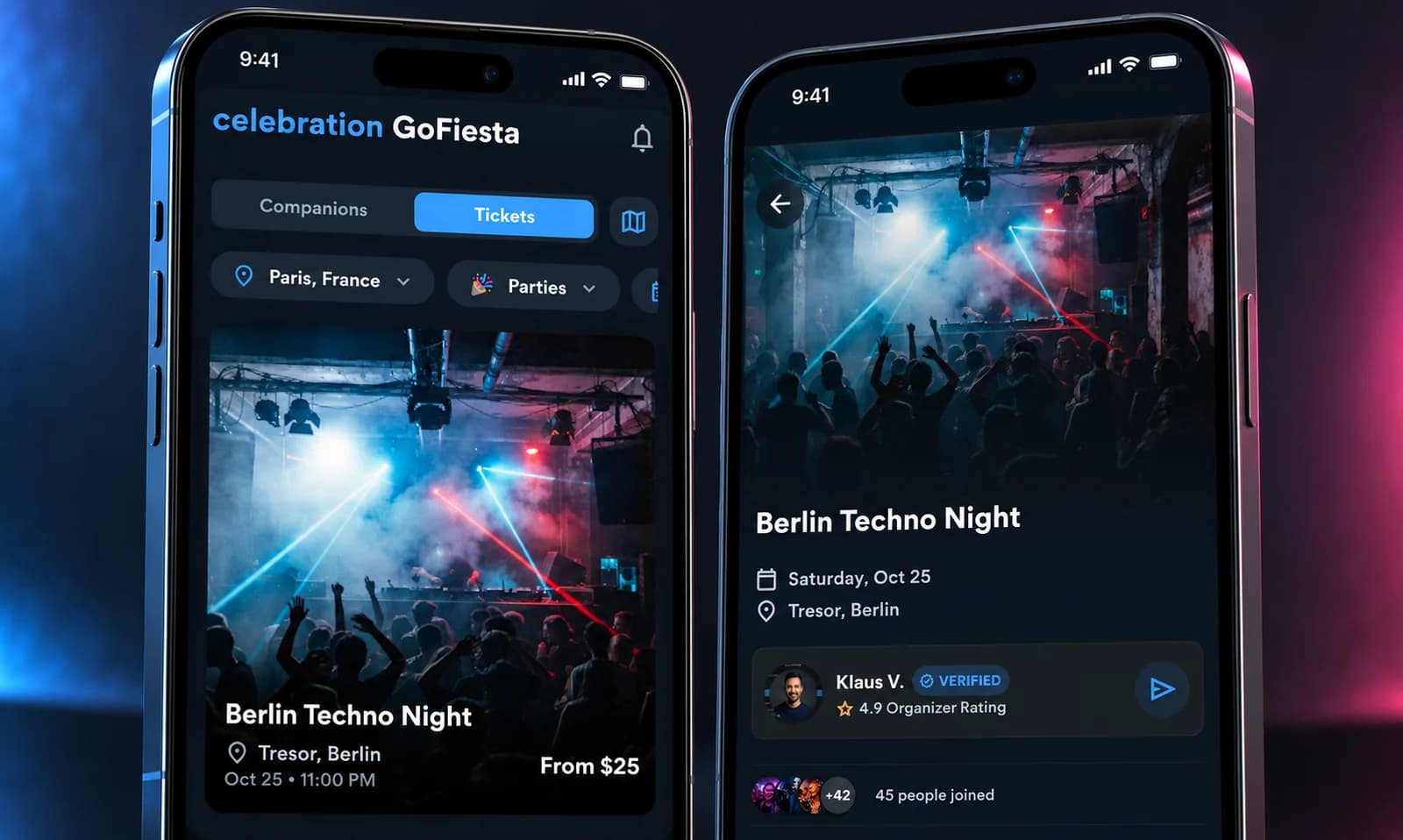
GoFiesta
A mobile app for finding parties and events abroad: tickets, travel companions and an organiser profile.
Frequently asked questions
How much does it cost to set up targeted ads?
Setup starts at ₽40,000 and covers audience research, campaign structure, 6 to 12 creatives, analytics wiring and launch in one channel. A second channel costs less to add because the audiences and offers already exist. Ongoing management runs from ₽30,000 a month, or a percentage of spend at larger volumes. Media budget is paid directly into the ad account and sits outside our fee: plan ₽30,000 to ₽50,000 for the test phase.
Can you still advertise on Instagram and Facebook?
Meta is banned in Russia, so advertising to a Russian audience through its platform is neither available nor lawful. We run Meta Ads only for projects selling abroad: SaaS, services for English-speaking markets and export e-commerce. For a Russian audience the working combination is different. VK Ads covers reach and look-alikes, Telegram Ads and channel placements bring topical traffic and subscriptions, and Yandex Direct captures existing demand from search.
Yandex Direct or social targeting, which should we start with?
They serve different kinds of demand. Search ads catch people already looking for a solution: conversion is higher, but volume is capped by query counts and auction prices. Social targeting in VK and Telegram works on a cold audience: each touch is cheaper, the path to a lead is longer, and you can scale and create demand. A practical rule: if your category has 500 plus monthly searches, start with Yandex Direct. If demand does not exist yet, start with social and content.
Does advertising in Russia need to be labelled, and who does it?
Yes. All online advertising in Russia must be labelled: you obtain an erid token, register the creative and its data with an authorised operator and file periodic reporting. Fines apply to both advertiser and platform. VK Ads and Yandex Direct handle labelling automatically inside the cabinet, but blogger and Telegram channel placements have to be registered by hand. We take that work on, register the creatives, apply the tokens and file the reporting with the spend data.
How soon do the first leads arrive?
Usually on day two to five after launch, though those early numbers mean little: the algorithms need roughly 50 to 100 conversions before optimisation stabilises. We plan 2 to 3 weeks for the test, which is enough to cut the audience and creative pairings that fail, find the two or three that work and learn the real cost per lead. Scaling decisions come from CRM lead cost and quality, not from CTR or reach.
What do you need from us before launch?
The minimum: access to the ad accounts or approval to create them under your company, access to the site and Metrica for goals and pixels, a product and pricing description, your customer segments and a summary of what you have already tried. CRM exports help a lot, since they seed look-alikes and exclude existing customers. If there is no landing page or it is outdated, building one first is the honest move, otherwise the budget buys traffic with nowhere to land.
Want to talk it through?
Tell us what needs building. We will work through the task, propose an approach and send a staged estimate. No charge, no commitment.
Related services
- SEO and GEO website promotionSearch traffic is the one acquisition channel that keeps working after the ad budget stops. We run two tracks in parallel: classic SEO for Yandex and Google, and GEO, the work of getting your pages quoted inside AI Overviews, Yandex Neuro, ChatGPT and Perplexity, where a growing share of queries now ends. It starts with an audit, never with buying links.
- SMM and social media managementSocial media stopped being a place where posting regularly is enough. In Russia two platforms are left standing, Telegram and VK, and each distributes content by its own rules: Telegram has no algorithmic feed and almost no organic growth, while VK hands out reach through short video and recommendations. We build the work around that reality: strategy, content pillars, a steady production rhythm and metrics that mean something.
- Landing page developmentOne page, one goal: the enquiry. We build the landing around a specific offer and the traffic you plan to send at it, whether that is search ads, paid social, organic or email.
- Motion design and AI video for adsWe produce short video ads: shots generated with AI models, motion graphics on top, then edit, grade and sound design. You get a 16:9 master plus reframed 9:16 and 1:1 cuts, ready to upload to social feeds, Reels, Shorts, marketplace listings and ad accounts. We are straightforward about where AI delivers in a day and where filming or hand-built animation is still the right answer.
Terms used on this page
- End-to-end analyticsEnd-to-end analytics is the system that links an ad click to booked revenue: data from ad accounts, call tracking, the website and the CRM is stitched together by visitor identifier so payback can be calculated per channel, campaign and keyword.
- Unit economicsUnit economics is the profitability calculation for a single business unit, usually a customer, an order or a subscription, comparing the revenue a customer brings over their lifetime (LTV) with the cost of acquiring them (CAC), with a ratio of three or more treated as sustainable.
- ROIROI is the return on investment metric: the difference between income and cost divided by cost, expressed as a percentage, with the marketing variant ROMI counting only the advertising budget on the cost side.
- UTM tagsUTM tags are parameters appended to a link (utm_source, utm_medium, utm_campaign, utm_content, utm_term) that pass the traffic source to analytics; without them paid, placement and email traffic collapses into one undifferentiated referral bucket.
Further reading
- VK Ads or Telegram Ads: where the 2026 media budget should goMeta is banned in Russia as an extremist organisation and advertising in its ecosystem has been prohibited since 1 September 2025. Here are the two remaining major channels, their economics, their funnels and the compliance rules.
- A business Telegram channel: how to run it, grow it and turn it into salesTelegram has no algorithmic feed, so organic growth does not happen: every subscriber arrives paid or from another channel. Here is the acquisition economics, the content that retains, and the funnel that sells.
- SMM strategy for 2026: VK, Telegram and short video that actually workBeing everywhere is not a strategy, it is a way to spread a budget thin. A platform selection matrix, why one mechanic cannot serve reach, loyalty and sales at once, and how to build a content plan that fits the team you actually have.