
Consulting
Website audit: technical, SEO and UX
Before changing the design, raising the ad budget, or telling support the site "just feels slower," find out what is actually happening. An audit is one report that pulls technical health, SEO and usability into a single list: what is on fire, what matters, and what can wait.
- Pricing
- From $200 · ≈ 15,000 ₽
- Timeline
- The express audit takes 3 working days. A full technical, SEO and UX review takes 1 to 2 weeks depending on site size and the number of page templates.
A starting price. The total depends on scope, integrations and deadlines.
In short
A website audit starts at ₽200 for the express format (3 days, up to 20 prioritised findings) and ₽800 for a full review (1 to 2 weeks) covering technical health, SEO, Core Web Vitals, usability and mobile. You get three ranked buckets, critical, important, can wait, not a flat 200-item list, each with a rough effort estimate to fix it.
Why one audit, not three separate ones
The market usually sells this in three separate pieces: an SEO agency reviews rankings and links, a design studio reviews usability, a developer reviews code and speed. The trouble is causes and effects cross between those three worlds. A traffic drop can be technical (the site got slower), product-shaped (a broken lead form that Metrica never flags) or content-driven (the copy is stale). Splitting diagnosis across three separate reports from three separate vendors means you are the one left to connect the dots.
We run one review with one priority list. If a traffic drop is caused by a technical error rather than content, the report says so directly instead of recommending a copy rewrite. If the site is slow because of three specific scripts rather than needing "optimisation in general," we name those three scripts.
The technical and SEO block
Indexation and crawling: what is actually in the Yandex and Google index, robots.txt and sitemap.xml checked for errors, duplicate pages, redirects and broken links. Schema.org markup: present, valid, and matching what is actually on the page. Mobile is reviewed separately, since both Yandex and Google build their index mobile-first.
Speed is measured against real field data (CrUX where available), not only a lab test: Core Web Vitals, LCP, INP, CLS, checked on the key page templates, not just the homepage. We identify what is actually slow: uncompressed images, render-blocking analytics and widget scripts, missing caching, fonts without font-display.
Yandex commercial ranking factors are a section that often gets skipped: are prices and contacts visible, is the ordering process clear, are there reviews, does the catalogue structure match what is actually sold. For stores and catalogues we also check Product markup and whether the filter structure is generating duplicate pages.
Usability and mobile
A technically clean site can still lose leads for mundane reasons: an unvalidated form, a call-to-action below the fold on a phone, a phone number that is not tappable, text a visitor has to pinch to zoom. We walk the key journeys on real devices, not just a browser emulator, and note exactly where it stops being obvious what to do next.
If Yandex.Metrica session recording is already connected, we watch real sessions instead of guessing: where people stall, what they click, what they ignore. This often produces more than a formal usability test, because it shows the behaviour of actual visitors rather than a test group.
A report you can actually use
Every finding in the report states the problem, why it matters, and the concrete fix, not a general note to "improve SEO." The list is split into three tiers: critical (affects revenue or indexation right now), important (affects growth but is not urgent), can wait. Each item carries a rough effort estimate so you can split the work between an in-house developer, a freelancer, or us.
The report is not tied to ordering further work. If you fix things yourself or hand them to an in-house team, take the document and use it. If you decide to fix some findings with us, the audit fee is credited against that work.
What the work includes
- A report with findings ranked critical, important, or can wait
- Indexation, robots.txt, sitemap.xml, duplicate and redirect checks
- Schema.org markup audit against what is actually on the page
- Core Web Vitals across key page templates with named root causes
- A review of Yandex commercial ranking factors
- Usability walkthrough of key journeys on real devices
- An effort estimate for fixing each finding
- A walkthrough call with time for questions
How we work
- 01
Access
You share access to Yandex.Metrica, Search Console/Webmaster and, where relevant, hosting or the repository.
- 02
Review
We work through technical, SEO and usability checks against a fixed list, recording findings with examples.
- 03
Prioritisation
Findings are sorted into three tiers with an effort estimate attached to each.
- 04
Report and call
We send the document and walk through it on a call, answering questions on any item.
Technology and tools
- Яндекс.Вебмастер
- Google Search Console
- Яндекс.Метрика
- GA4
- Lighthouse
- PageSpeed Insights
- Screaming Frog
Selected work

NA Consulting
A website for the NA Consulting agency. An interactive landing page packs the full story of the agency and its services into a minimalist layout. Calm colours convey trust and professionalism. Built by Veltos.Tech together with Aliya (finnikkis.github.io/maulaviyevadesign).
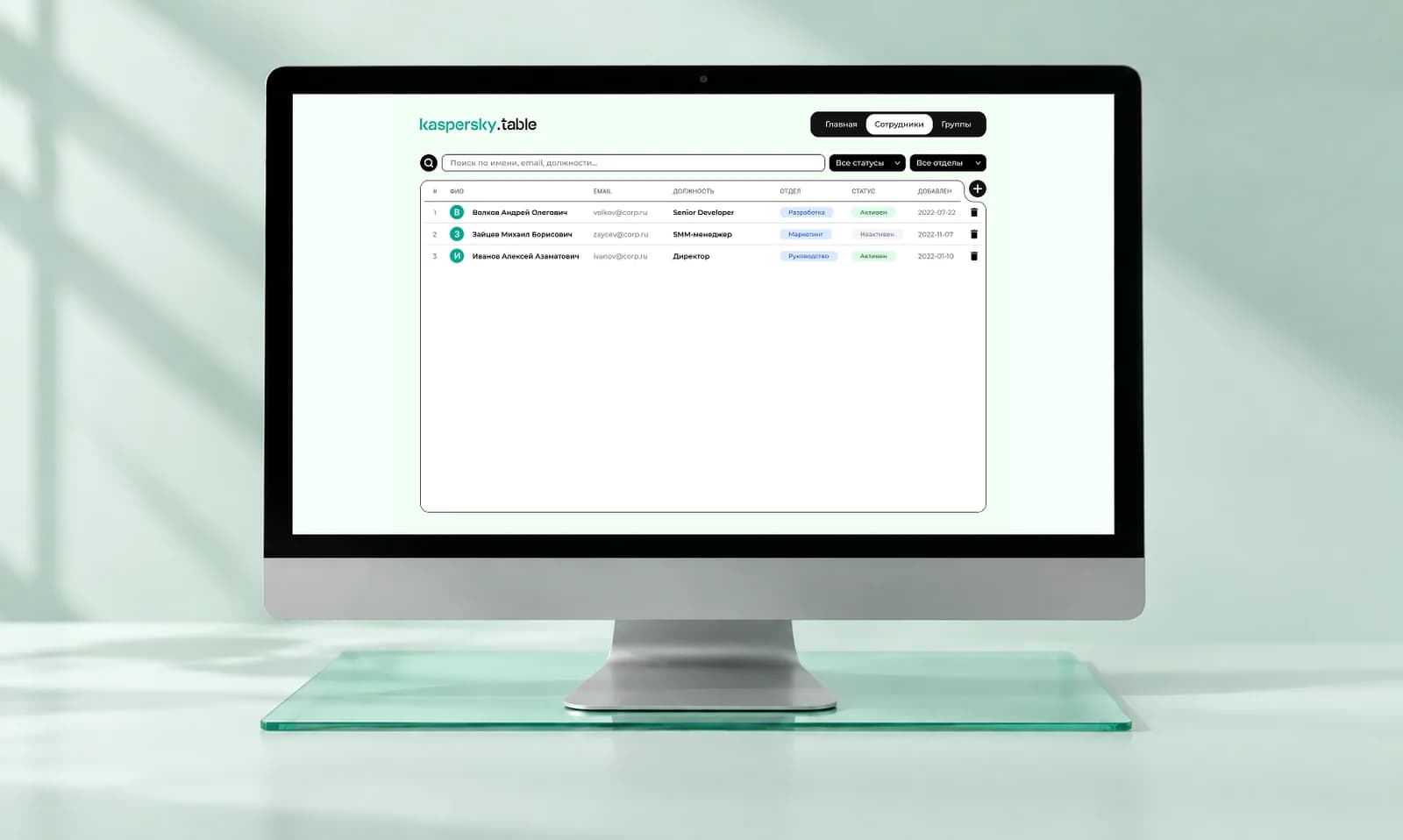
kaspersky.table
A demo stand website built for Kaspersky. The dashboard follows the company’s visual language and secure product contours, with a minimalist interface in mint-green tones.
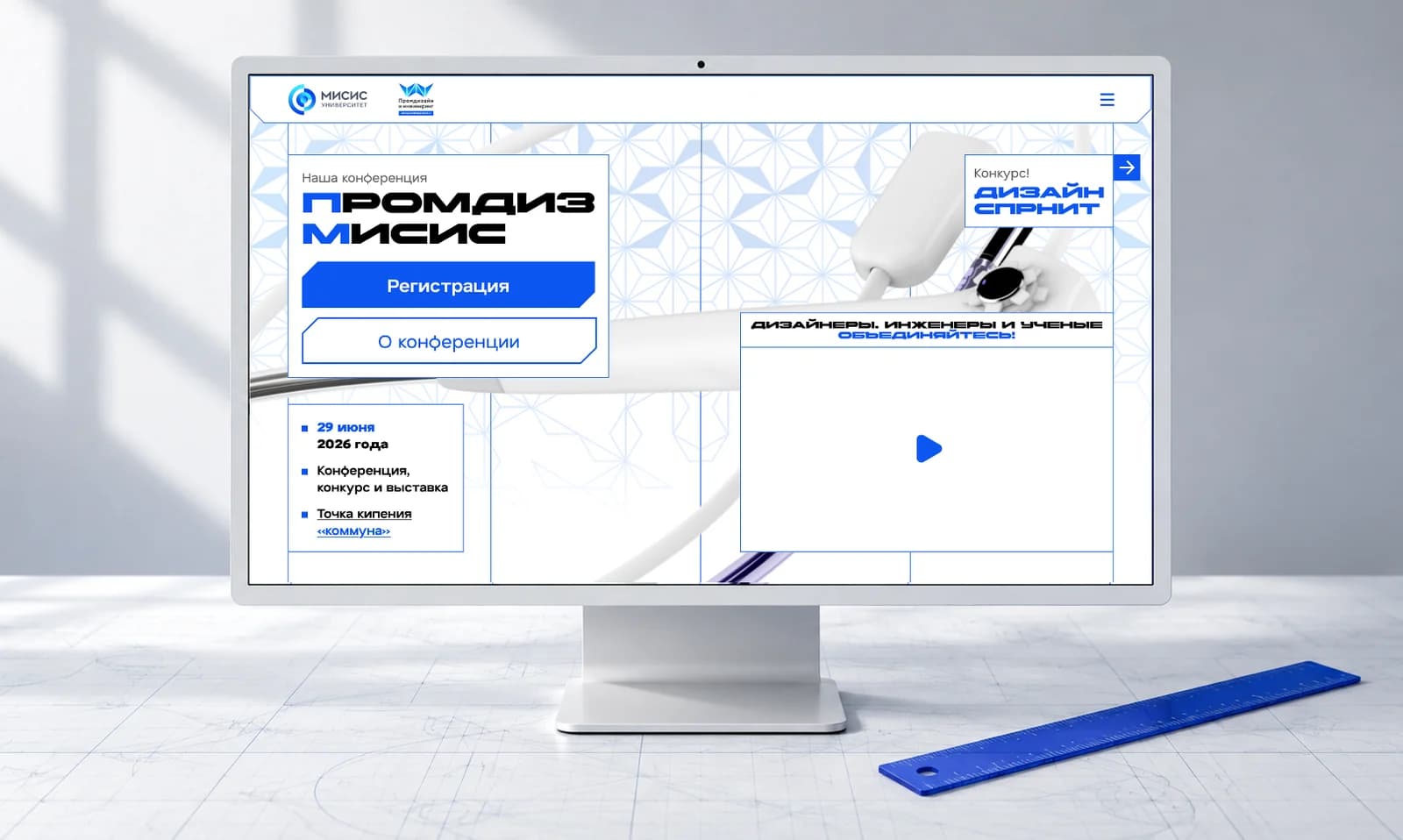
Promdiz MISiS
A redesign for NITU MISIS. The Industrial Design department’s “Design Sprint” site was rebranded to blend engineering blueprints with modern tech — a layout that feels drawn with a ruler and dotted with editing pop-ups.
Frequently asked questions
How much does a website audit cost?
From ₽200 for the express format: 3 days, up to 20 findings across the key areas with priorities. A full audit covering Core Web Vitals per template, commercial factors and usability starts at ₽800 and takes 1 to 2 weeks. The price grows with the number of unique page templates and whether there is a store catalogue, which adds a filter and Product-markup review.
How is this different from an SEO audit?
An SEO audit looks only at the search side: indexation, links, keywords. Ours is broader and adds technical health (speed, errors, security) and usability (forms, journeys, mobile), because a drop in traffic or leads is rarely caused by just one thing. If you specifically need a narrow SEO-only review before starting promotion, say so at the brief and we will scope down both the work and the price.
Do we need an audit before a redesign?
Yes, and this is where it saves the most. A redesign without an audit risks repeating old mistakes in a new wrapper, or worse, losing rankings when the URL structure changes. The audit records what already works and should not be touched, what genuinely needs to change, plus the list of URLs and metadata to preserve during the move.
Will you fix everything after the audit?
Not necessarily. The report is not tied to ordering further work. Take the document and hand it to your own team, a freelancer, or fix it yourself from the instructions. If you decide to fix things with us, through website improvement or the separate SEO and design services, the audit fee is credited against that work.
Can the audit tell us why traffic dropped?
In most cases, yes. We cross-reference the timing of the drop against the site’s change history, algorithm updates, technical logs and analytics data to find what lines up. Common causes: pages accidentally deindexed after a site update, broken markup, a sharp drop in speed, or competitors simply outranking you. If the cause is external, an algorithm shift with no visible site-side error, we say so honestly instead of inventing a technical finding to justify the fee.
Want to talk it through?
Tell us what needs building. We will work through the task, propose an approach and send a staged estimate. No charge, no commitment.
Related services
- IT consulting and product auditThe most expensive mistakes in software happen before the first line of code: a misread problem, a stack chosen out of a contractor’s habit, and a specification that does not exist. Consulting exists to settle all of that before the development meter starts running: what to build, out of what, at what cost and in which order. The result is a document, not an opinion on a call.
- SEO and GEO website promotionSearch traffic is the one acquisition channel that keeps working after the ad budget stops. We run two tracks in parallel: classic SEO for Yandex and Google, and GEO, the work of getting your pages quoted inside AI Overviews, Yandex Neuro, ChatGPT and Perplexity, where a growing share of queries now ends. It starts with an audit, never with buying links.
- Website support and improvementNot every project needs a rewrite. It is often cheaper to fix the speed, clear the technical SEO errors, add the missing sections and integrations, and end up with a working site without paying for a new build.
- UX/UI design for websites and appsWe design interfaces that survive contact with production: research, structure, UI kit and a clean handoff to the developers. Everything lives in Figma as components with real states and real breakpoints, not as a folder of flat mockups. The same process covers landing pages, corporate sites, e-commerce, web apps and mobile.
Terms used on this page
Further reading
- Website Audit Checklist: What to Check Before a Redesign or Ad LaunchA complete self-audit checklist covering indexation, speed, markup, mobile usability and commercial ranking factors, with the tools to run each check and a way to prioritise what you find.
- Technical, SEO and UX Audit: Which One Do You Actually NeedTechnical, SEO and UX audits answer different questions and catch different problems. A practical breakdown of what each one covers, what it misses, and how to know which one your situation calls for.
- A Slow Site Loses Money: Core Web Vitals and ConversionSite speed is not a technical metric, it is a line in the revenue report. Core Web Vitals explained in plain language, how to find the real cause of a slow page, and a fix list sorted by return per hour of work.