
Development
Website support and improvement
Not every project needs a rewrite. It is often cheaper to fix the speed, clear the technical SEO errors, add the missing sections and integrations, and end up with a working site without paying for a new build.
- Pricing
- From $140 · ≈ 10,000 ₽
- Timeline
- The audit takes 2-3 days. Individual fixes run from a few hours to a week. Ongoing support works on an agreed monthly hour budget.
A starting price. The total depends on scope, integrations and deadlines.
In short
Website improvement starts at about $500, and work on third-party backend and frontend projects at $620. We start with an audit and say plainly which is cheaper, improving or rebuilding. Typical jobs: load speed, technical SEO fixes, new sections and blocks, CRM and payment integrations, repairing responsive layout, design refreshes and refactoring.
Audit first, work second
We do not start blind. We look at the code, the speed, the technical SEO state, console errors, dependencies and how the project builds and deploys. The result is a prioritised, estimated list: what is critical, what can wait, and what is not worth touching at all.
Sometimes the conclusion is "rebuild". If the code cannot be maintained, if dependencies are so old that updating breaks everything, or if the platform will not allow what you need, we say so rather than selling endless patches.
What we usually fix
- Speed: heavy images, render-blocking scripts, missing caching
- Technical SEO: duplicates, missing canonicals, broken redirects, pages accidentally blocked from indexing
- Responsive layout broken on phones and tablets
- Forms and integrations: leads not arriving, no CRM connection, payments dropping
- New sections: blog, catalogue, service pages, landing pages for ads
- Security: outdated dependencies, missing HTTPS, exposed admin panels
Working in someone else’s code
We regularly pick up projects left by other teams, both backend and frontend. The first job is restoring the ability to change things safely: fixing the build and environments, documenting what we manage to establish, and only then touching functionality. It looks slower at the start and it avoids the situation where one fix breaks three other things.
What the work includes
- An audit with a prioritised, estimated list of issues
- Layout and responsive errors fixed
- Load speed and Core Web Vitals work
- A repaired technical SEO baseline
- New pages, blocks and sections
- Integrations connected: CRM, payments, analytics, notifications
- Updated dependencies and closed vulnerabilities
- Documentation of what was changed
How we work
- 01
Access and audit
We look at code, hosting, analytics and current state, then produce an estimated task list.
- 02
Priorities
We agree what happens now and what waits. Critical items go first.
- 03
Iterative work
In small batches, verified on staging, so nothing breaks in production.
- 04
Handover and support
A report on what was done, documentation, and ongoing support if you want it.
Technology and tools
- React
- Next.js
- Vue
- Nuxt
- Angular
- TypeScript
- Node.js
- NestJS
- Go
- PostgreSQL
- MongoDB
- Docker
- Nginx
- WordPress
- Bitrix
Selected work

NA Consulting
A website for the NA Consulting agency. An interactive landing page packs the full story of the agency and its services into a minimalist layout. Calm colours convey trust and professionalism. Built by Veltos.Tech together with Aliya (finnikkis.github.io/maulaviyevadesign).
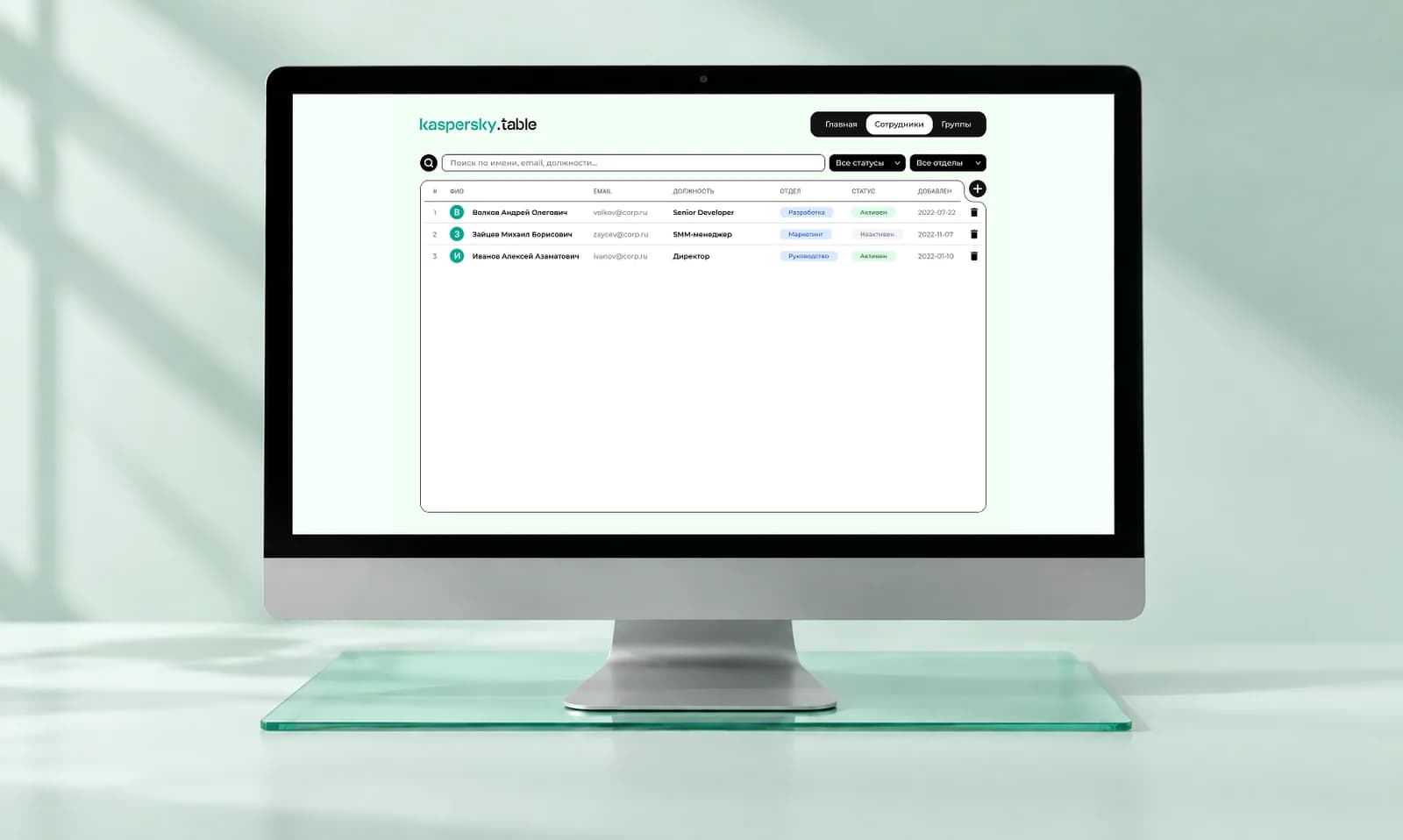
kaspersky.table
A demo stand website built for Kaspersky. The dashboard follows the company’s visual language and secure product contours, with a minimalist interface in mint-green tones.

Promdiz MISiS
A redesign for NITU MISIS. The Industrial Design department’s “Design Sprint” site was rebranded to blend engineering blueprints with modern tech — a layout that feels drawn with a ruler and dotted with editing pop-ups.
Frequently asked questions
How much does website improvement cost?
Website improvement starts at about $500, and backend or frontend work on third-party projects at $620. The real number depends on the state of the code: a clean, documented project moves fast, a neglected one costs time just to understand. That is why we do a fixed-price audit first and quote the actual tasks after.
Improve the site or build a new one?
Improving wins when the structure and design are broadly fine and the problems are specific: speed, bugs, missing sections, technical SEO gaps. A rebuild is justified when the structure no longer matches what the business needs, when the code cannot be maintained, when the platform blocks growth, or when the design is dated enough that patching blocks will not help. The audit exists to answer that question with numbers rather than impressions.
Will you take on another team’s project?
Yes, that is a regular part of what we do. We need access to the code, hosting and admin panel, plus whatever documentation exists. The first stage is getting the build and environments in order so changes can be made safely, and only then do we touch functionality. If the project is in a state where any change is risky, we will say so before starting.
Can you just make the site faster?
Yes, that is a common standalone job. Most of the win usually comes from three things: images converted to modern formats at correct sizes, render-blocking scripts removed, and caching configured on the server and CDN. After that come the deeper changes: server rendering instead of a heavy client app, bundle splitting, font handling. We measure before and after against Core Web Vitals on field data, not just a synthetic test.
Want to talk it through?
Tell us what needs building. We will work through the task, propose an approach and send a staged estimate. No charge, no commitment.
Related services
- Website development, end to endWe build sites that still hold up a year later: from a one-page CMS build to a store or a web application on React and Next.js. One team for design, code, integrations and launch.
- SEO and GEO website promotionSearch traffic is the one acquisition channel that keeps working after the ad budget stops. We run two tracks in parallel: classic SEO for Yandex and Google, and GEO, the work of getting your pages quoted inside AI Overviews, Yandex Neuro, ChatGPT and Perplexity, where a growing share of queries now ends. It starts with an audit, never with buying links.
- UX/UI design for websites and appsWe design interfaces that survive contact with production: research, structure, UI kit and a clean handoff to the developers. Everything lives in Figma as components with real states and real breakpoints, not as a folder of flat mockups. The same process covers landing pages, corporate sites, e-commerce, web apps and mobile.
- Website audit: technical, SEO and UXBefore changing the design, raising the ad budget, or telling support the site "just feels slower," find out what is actually happening. An audit is one report that pulls technical health, SEO and usability into a single list: what is on fire, what matters, and what can wait.
Terms used on this page
- Outsourcing vs in-houseOutsourcing and in-house are two ways to cover a development need: contract an external team at an agreed hourly rate, or build a staff team where salaries come with payroll taxes, recruitment, equipment and management on top.
- Legacy codeLegacy code is working code that is expensive to change: it runs on an outdated stack, has no test coverage or has lost its authors, so every edit means reconstructing the logic from the source and risks breaking something unrelated.
- Behavioural signalsBehavioural signals describe how users act in the results page and on the site: whether they click the snippet, whether they bounce back to search afterwards, how long they stay; Yandex uses them in ranking and penalises manipulation aggressively.
- Product backlogA product backlog is a priority-ordered list of everything that could be built into a product: it is not a dated plan, it is continuously revised, and one person, the product owner, is accountable for the order of it.
- RefactoringRefactoring is changing the internal structure of code without changing its external behaviour: the functionality before and after is identical, what changes is readability, coupling and the cost of the next change, verified by tests and regression checks.
- Technical debtTechnical debt is the accumulated gap between how a system is built and how it should have been built: every shortcut taken to hit a deadline turns into a permanent surcharge on the cost and duration of everything built afterwards.
Further reading
- A Slow Site Loses Money: Core Web Vitals and ConversionSite speed is not a technical metric, it is a line in the revenue report. Core Web Vitals explained in plain language, how to find the real cause of a slow page, and a fix list sorted by return per hour of work.
- Redesigning a Site Without Losing Traffic: Stages, Risks and the SEO Migration ChecklistHalf of all redesign requests are really content, speed or offer problems. How to tell them apart, why a phased rollout beats a big bang launch, and what belongs in the migration checklist so the organic traffic survives.
- SEO in Yandex in 2026: what changed and what no longer worksLink buying is dead weight, templated copy pushes pages into the low-value bucket, and behaviour manipulation is no longer a grey tactic but a way to lose the site. Here is what actually drives Yandex rankings in 2026.