
Consulting
CRM implementation and sales automation
Enquiries from messengers, email and calls get lost when the only place tracking them is a sales manager’s memory. A CRM fixes this, but only when it is configured around your actual sales process rather than left as the out-of-the-box default. We implement amoCRM and Bitrix24, set up automation, and connect everything to the website, telephony and analytics.
- Pricing
- From $820 · ≈ 60,000 ₽
- Timeline
- A basic amoCRM setup with one pipeline takes from 2 weeks. Bitrix24 with several departments and internal processes takes from 4 weeks. End-to-end analytics adds 1 to 2 weeks depending on the number of ad channels.
A starting price. The total depends on scope, integrations and deadlines.
In short
CRM implementation starts at ₽800 and takes 2 to 4 weeks: a sales pipeline built around your actual process, automated tasks and reminders, integration with the website, telephony, email and messengers, and team training. amoCRM suits a fast sales team running one pipeline; Bitrix24 fits when you need to manage several departments, tasks and internal processes in one system.
amoCRM or Bitrix24
amoCRM is built around one thing: the sales pipeline. A visual stage builder, simple if-then automation, and a fast start for a team of 2 to 15 salespeople. It wins when you have one sales process and the goal is simply not losing leads and seeing where each deal is stuck.
Bitrix24 is CRM plus tasks, documents, internal communication and more flexible automation with branching logic. It suits companies where sales is only part of the picture: connecting the sales team with production, support or accounting, or running several pipelines with different logic. The cost of that flexibility is a longer setup and a steeper learning curve for the team.
We do not sell the same system to everyone. At the brief we work through your sales process and how many departments are involved, then recommend whichever actually fits, not whichever is more convenient for us.
Automation: what actually earns its keep
Automation pays off wherever an action repeats and needs no judgement: assigning a task the moment a lead arrives, a reminder if a deal has not moved in two days, an automatic email after payment, moving a deal to the next stage once a condition is met. That is what we set up, not an attempt to automate sales as a whole; wherever a decision needs human judgement, a robot only gets in the way.
Website and messenger integration closes the main leak: a form submission, a site chat message, a Telegram or VK enquiry lands in the CRM automatically, tagged with its source and campaign, instead of being copied over by hand (or not copied at all). Telephony is connected so a call creates a deal and attaches the call recording.
End-to-end analytics on top of the CRM
A CRM without analytics answers "how many deals." End-to-end analytics answers "which advertising actually made money": we connect UTM tags and ad spend from Yandex Direct, VK Ads and Telegram Ads to the deal data in the CRM and feed the result into Yandex.Metrica or a standalone dashboard. That gives you the real cost of a customer per channel, not the cost of a click or a lead.
Technically this is a two-way link between the Metrica Client ID and the CRM deal ID: advertising data flows into the CRM, and the deal outcome (paid, cancelled, amount) flows back into Metrica. Both amoCRM and Bitrix24 have ready-made integrations for this, but the link has to be configured carefully, or deals silently drop out of the reports and the numbers stop adding up.
- A sales pipeline built around your actual process, not the default template
- Automated tasks, reminders and stage transitions
- Website, telephony, email and messenger integration
- End-to-end analytics: cost per customer by advertising channel
- Team training and a written workflow guide
What the work includes
- A configured sales pipeline with stages matching your process
- Automated tasks, reminders and stage transitions
- Website integration: forms, chat, callback requests
- Telephony integration with call recording
- Messenger integration: Telegram, VK
- End-to-end analytics linking UTM tags, ad spend and CRM data
- Access rights and roles for different staff
- Team training and a short workflow guide
How we work
- 01
Sales process review
We map how leads currently move from first contact to payment, and where they leak.
- 02
System choice and pipeline setup
We recommend amoCRM or Bitrix24 and configure stages, fields and access rights.
- 03
Automation and integrations
We set up automated tasks and connect the website, telephony and messengers.
- 04
Analytics
We link the CRM to Yandex.Metrica and ad accounts to calculate cost per customer.
- 05
Training and launch
We train the team, hand over the workflow guide and support the first weeks of live use.
Technology and tools
- amoCRM
- Битрикс24
- Яндекс.Метрика
- Яндекс.Директ API
- VK Ads API
- Telegram Bot API
- Google Sheets
- Zapier / Albato
Selected work
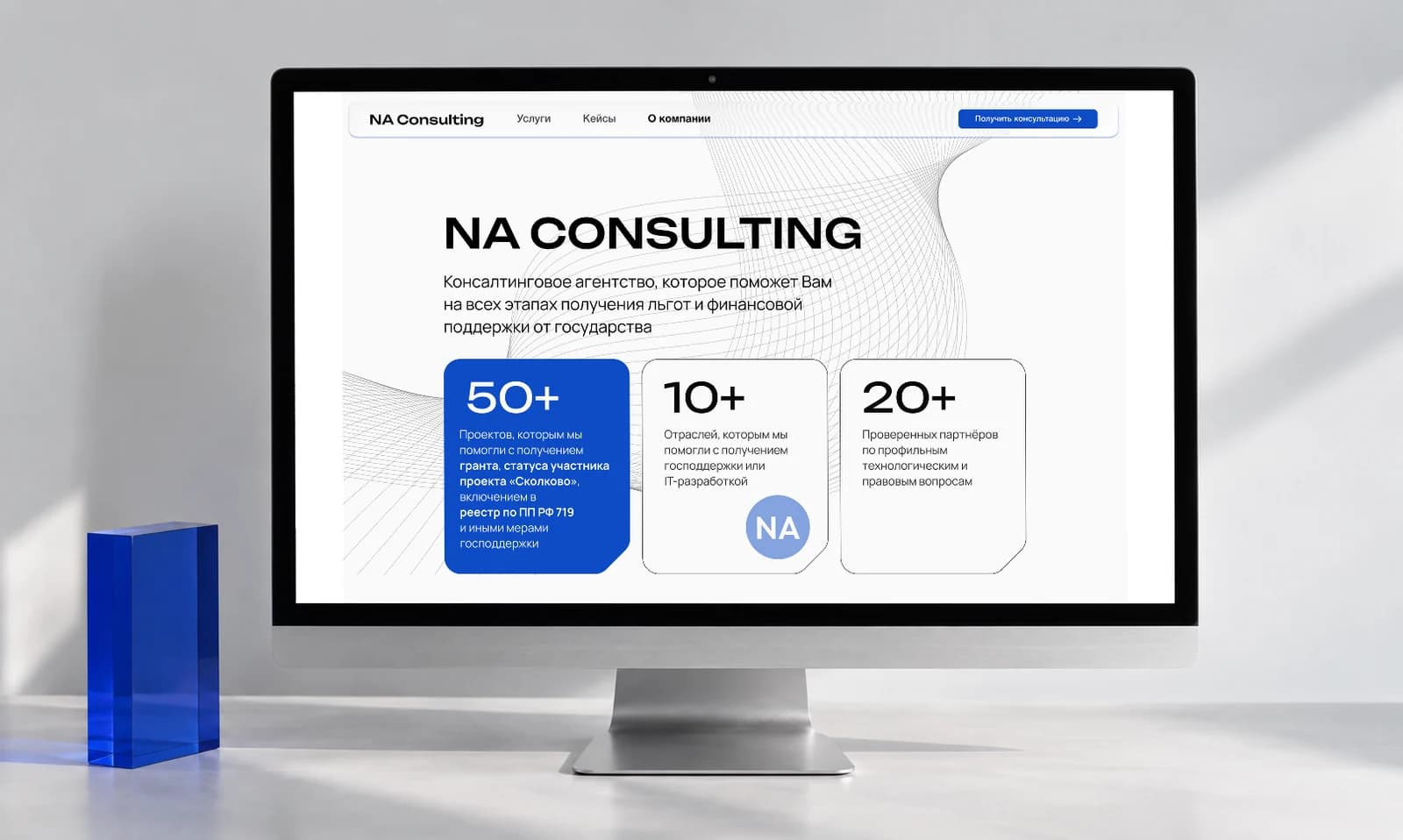
NA Consulting
A website for the NA Consulting agency. An interactive landing page packs the full story of the agency and its services into a minimalist layout. Calm colours convey trust and professionalism. Built by Veltos.Tech together with Aliya (finnikkis.github.io/maulaviyevadesign).
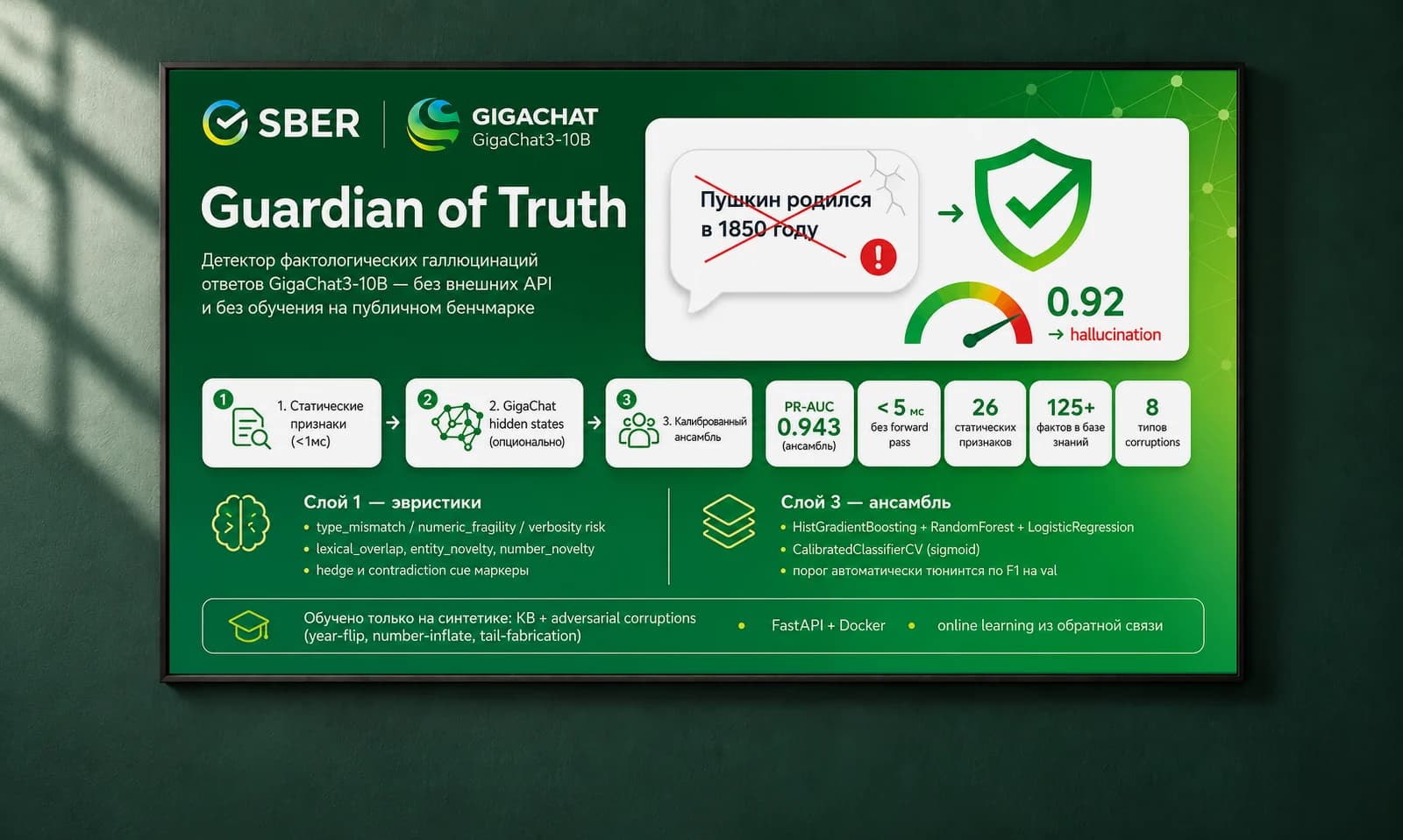
Sber — Guardian of Truth
Checks GigaChat answers for factual hallucinations and returns a probability of invented facts — no external APIs or fine-tuning.
Frequently asked questions
How much does CRM implementation cost?
From ₽800 for a basic amoCRM setup with one sales pipeline, website integration and team training. Bitrix24 with several departments, roles and internal processes costs more due to the larger setup, typically from ₽1,600. End-to-end analytics with ad account integration is a separate option from ₽400. The final price depends on the number of pipelines, integrations, and whether data needs to be migrated from an old system.
amoCRM or Bitrix24, which should we choose?
If you have one sales team, one pipeline and the goal is simply not losing leads, take amoCRM. It is simpler, faster to implement and cheaper to maintain. If sales is only part of the business and you need to connect several departments, tasks, documents and internal processes in one system, choose Bitrix24. We recommend a system after reviewing your process at the brief, not by default.
What is end-to-end analytics and why does it matter?
Standard analytics shows clicks and leads. End-to-end analytics goes further and shows which advertising actually led to a paid sale, not just an enquiry: it connects ad spend to CRM data on whether the customer bought and for how much. Without it, it is easy to scale a channel that produces many cheap leads but few real sales, and just as easy to undervalue a channel with expensive but high-quality leads.
Can you migrate data from an old CRM or Excel?
Yes. Migrating contacts, deals and communication history is possible from most CRM systems and from Excel spreadsheets. The complexity and cost depend on how the source data is structured: the tidier the old database, the faster the migration. We always take a backup of the source data before migrating, in case something needs cross-checking later.
Our team resists working in a CRM. What can be done?
This usually means the system was set up inconveniently: too many mandatory fields, a pipeline that does not match the real process, or managers who do not see what is in it for them personally, only for the boss. We keep mandatory fields to a minimum, automate the manual busywork managers used to do by hand, and use training to show that a well-set-up CRM removes work from a salesperson (reminders, email templates) rather than adding it.
Want to talk it through?
Tell us what needs building. We will work through the task, propose an approach and send a staged estimate. No charge, no commitment.
Related services
- IT consulting and product auditThe most expensive mistakes in software happen before the first line of code: a misread problem, a stack chosen out of a contractor’s habit, and a specification that does not exist. Consulting exists to settle all of that before the development meter starts running: what to build, out of what, at what cost and in which order. The result is a document, not an opinion on a call.
- Targeted and search advertisingPaid advertising brings traffic the day after launch, and burns budget just as fast when audiences are guessed at and nobody counts the leads. We build campaigns in the channels that genuinely work in Russia in 2026: VK Ads, Telegram Ads and Yandex Direct, plus Meta and Google Ads for projects selling abroad. Tracking goes in before launch, not after.
- Website support and improvementNot every project needs a rewrite. It is often cheaper to fix the speed, clear the technical SEO errors, add the missing sections and integrations, and end up with a working site without paying for a new build.
- Web app and Telegram Mini App developmentFor when a site is no longer enough and you need a product: an account area, a dashboard, an internal tool or a Mini App inside Telegram. We design the architecture, write the backend and frontend, and take it to release.
Terms used on this page
Further reading
- AmoCRM or Bitrix24: Choosing a CRM for Your Sales Team in 2026AmoCRM and Bitrix24 are not a better-or-worse comparison, they fit different business structures. A side-by-side look at pipelines, automation, cost and the learning curve, built to save you a costly switch in a year.
- End-to-End Analytics: Connecting Your Website, Ads and CRMStandard analytics shows clicks and leads, not money. A step by step guide to connecting your website, ad accounts and CRM into one system that reports real cost per customer, by channel.
- VK Ads or Telegram Ads: where the 2026 media budget should goMeta is banned in Russia as an extremist organisation and advertising in its ecosystem has been prohibited since 1 September 2025. Here are the two remaining major channels, their economics, their funnels and the compliance rules.