
Development
HTML5 game development
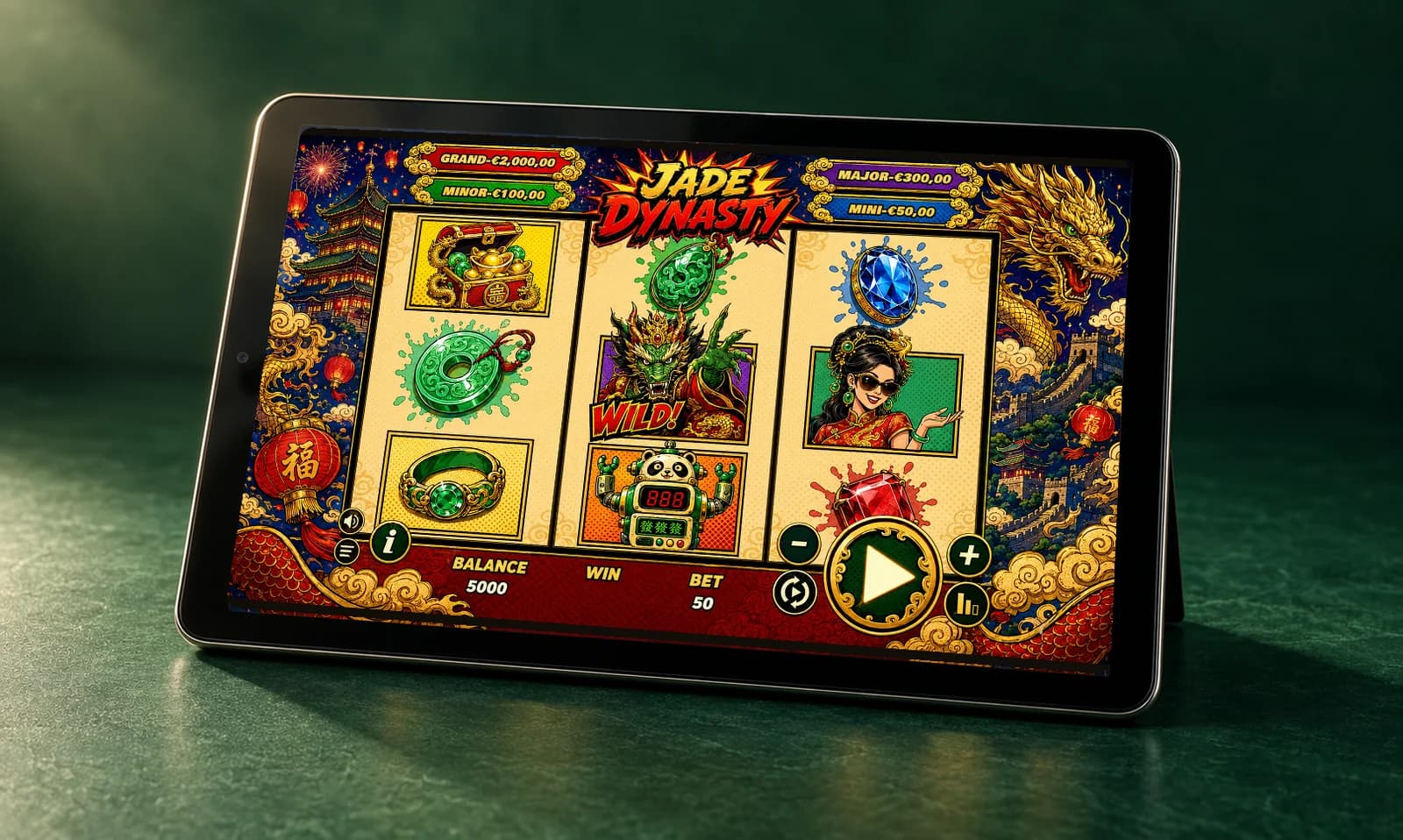
Browser games that run with no install and behave the same on desktop and phone: art, animation, game logic and integration on the provider side.
- Pricing
- From $280 · ≈ 20,000 ₽
- Timeline
- From 6 weeks for a mid-sized game. A playable mechanic prototype can be ready in 1.5-2 weeks.
A starting price. The total depends on scope, integrations and deadlines.
In short
HTML5 game development starts at about $5,400 and takes from 6 weeks. That covers concept and art, animation, game logic and the math model, sound, responsive builds for desktop and mobile, optimisation for low-end devices, and packaging for provider integration. Formats: slots, crash, roulette, arcades, promo mechanics and campaign games.
Art, animation and performance
A web game has to hold a stable frame rate on a five-year-old phone, not just on a work laptop. We pack sprite atlases, watch draw call counts, optimise animation and bundle size, and stream in the heavy parts as they are needed. First load is the metric that matters: if the game takes too long, part of the audience never reaches it.
Game logic and math
Mechanics and math model are designed together: probabilities, balance, the engagement curve. Any logic that decides an outcome stays on the server and the client only renders it, otherwise the game can be tampered with from the browser. For formats where provable fairness matters, we implement the appropriate schemes.
Integration and handover
The build is prepared to the platform’s requirements: integration protocol, session handling, localisation, supported resolutions, packaging rules. We stay with the integration until the game runs reliably on the provider side, then hand over source and documentation.
What the work includes
- Concept, game mechanics and math model
- Art, characters and game UI
- Animation and sound design
- Client and server-side logic
- Responsive builds for desktop and mobile, portrait and landscape
- Bundle size and performance optimisation
- Interface localisation
- A build matching provider requirements, with integration support
How we work
- 01
Concept and mechanics
Format, rules, balance and math. Visual references are settled here too.
- 02
Art and prototype
A playable prototype on rough art, to check how the mechanic actually feels.
- 03
Production
Final art, animation, sound, server-side logic.
- 04
Optimisation and testing
Low-end device checks, bundle size, frame stability.
- 05
Integration
Packaged to the platform’s requirements and supported until it runs cleanly.
Technology and tools
- TypeScript
- JavaScript
- Three.js
- HTML5 Canvas
- WebGL
- Node.js
- Blender
- Spine
- Cinema 4D
Selected work


Frequently asked questions
How much does an HTML5 game cost?
From about $5,400 for a mid-sized game with original art, animation, server-side logic and responsive layout. The cost drivers are the volume and originality of the art, how complex the mechanics and math are, screen and state count, and the integration requirements of the specific platform. Simple promo mechanics for marketing campaigns come in well below full game products.
What are web games built with?
For 2D, Canvas and dedicated engines are usually enough; for 3D and heavier effects we use WebGL and Three.js. The choice follows the visual style and performance targets: heavy 3D looks great but cuts off part of the mobile audience. We propose the stack after the mechanics and target devices are settled, not before.
Will the game work on phones?
Yes, mobile is part of the job: the interface reflows for portrait and landscape, controls adapt to touch, art loads at an appropriate resolution. We test on real devices of different ages rather than only current flagships, because it is the older phones that expose performance and bundle-size problems.
Do you handle provider integration?
Yes. We prepare the build to the specific platform’s requirements — integration protocol, session handling, supported resolutions, localisation — and stay with it until it runs cleanly on their side. Requirements differ between platforms, so name the target providers at the start: it affects both client and server architecture.
Want to talk it through?
Tell us what needs building. We will work through the task, propose an approach and send a staged estimate. No charge, no commitment.
Related services
- Web app and Telegram Mini App developmentFor when a site is no longer enough and you need a product: an account area, a dashboard, an internal tool or a Mini App inside Telegram. We design the architecture, write the backend and frontend, and take it to release.
- UX/UI design for websites and appsWe design interfaces that survive contact with production: research, structure, UI kit and a clean handoff to the developers. Everything lives in Figma as components with real states and real breakpoints, not as a folder of flat mockups. The same process covers landing pages, corporate sites, e-commerce, web apps and mobile.
- Motion design and AI video for adsWe produce short video ads: shots generated with AI models, motion graphics on top, then edit, grade and sound design. You get a 16:9 master plus reframed 9:16 and 1:1 cuts, ready to upload to social feeds, Reels, Shorts, marketplace listings and ad accounts. We are straightforward about where AI delivers in a day and where filming or hand-built animation is still the right answer.
- Website development, end to endWe build sites that still hold up a year later: from a one-page CMS build to a store or a web application on React and Next.js. One team for design, code, integrations and launch.
Further reading
- How to Choose a Tech Stack: Criteria That Outlive the HypeA stack is a five-year commitment usually made in a single call. Here is the order the decisions should be taken in, the criteria that carry real weight, working stacks for six project archetypes and what a wrong choice costs.
- A Slow Site Loses Money: Core Web Vitals and ConversionSite speed is not a technical metric, it is a line in the revenue report. Core Web Vitals explained in plain language, how to find the real cause of a slow page, and a fix list sorted by return per hour of work.
- What a Website Actually Costs in 2026: The Estimate, Line by LineA practical breakdown of a web development estimate: what analytics, design, front end, back end and integrations actually cost, which expenses always show up after launch, and where cutting the budget is safe.